


اخبار العرب-كندا 24: السبت 27 ديسمبر 2025 03:56 مساءً
Here’s the latest news concerning climate change and biodiversity loss in B.C. and around the world, from the steps leaders are taking to address the problems, to all the up-to-date science.
Check back every Saturday for more climate and environmental news or sign up for our Sunrise newsletter HERE.
In climate news this week:
• Wildfires, floods and cyclones among world’s costliest climate breakdown disasters of 2025
• Invasive fish introduced at Cultus Lake pose serious threat to salmon
• Feds to reveal future of EV mandate in 2026
Advertisement
Advertisement
Advertisement
Advertisement
Human activities like burning fossil fuels and farming livestock are the main drivers of climate change, according to the UN’s intergovernmental panel on climate change. This causes heat-trapping greenhouse gas levels in Earth’s atmosphere, increasing the planet’s surface temperature.
The panel, which is made up of scientists from around the world, including researchers from B.C., has warned for decades that wildfires and severe weather, such as the province’s deadly heat dome and catastrophic flooding in 2021, would become more frequent and intense because of the climate emergency. It has issued a code red for humanity and warns the window to limit warming to 1.5 C above pre-industrial times is closing.
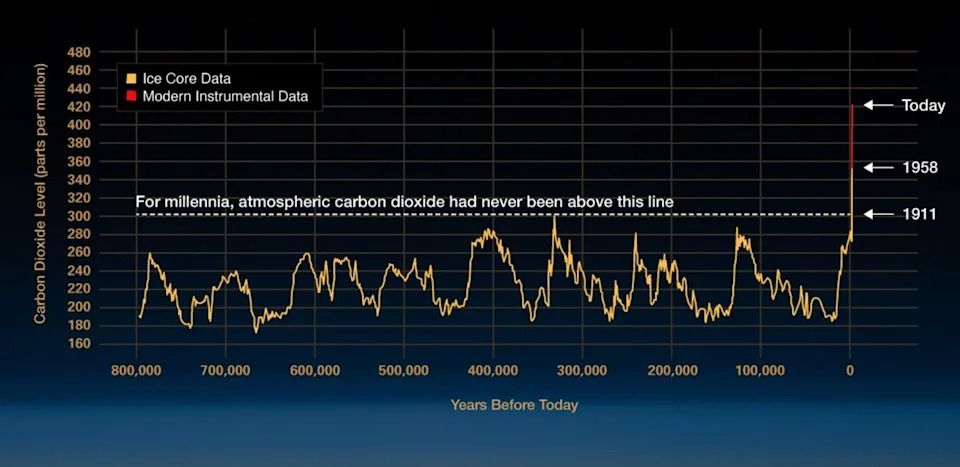
According to NASA climate scientists, human activities have raised the atmosphere’s carbon dioxide content by 50 per cent in less than 200 years, and “there is unequivocal evidence that Earth is warming at an unprecedented rate.”
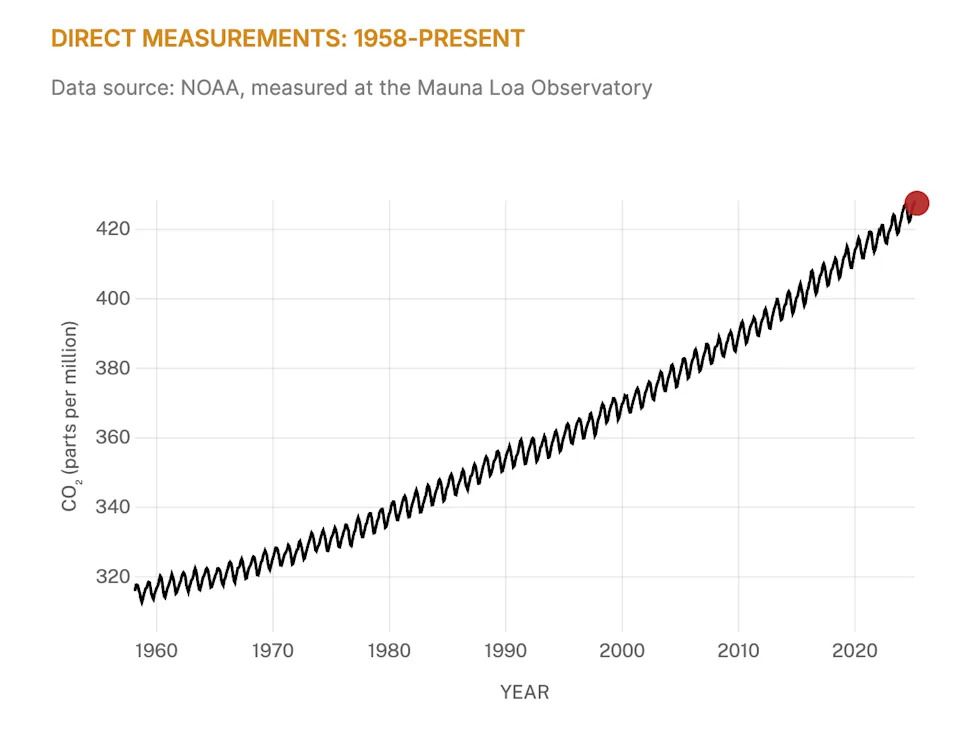
As of Dec. 5, carbon dioxide in the atmosphere was 426.46 parts per million, up slightly from 424.87 ppm the previous month, according to the latest available data from the NOAA measured at the Mauna Loa Observatory, a global atmosphere monitoring lab in Hawaii. The NOAA notes there has been a steady rise in CO2 from under 320 ppm in 1960.
Carbon dioxide in the atmosphere warms the planet, causing climate change. Human activities have raised the atmosphere’s carbon dioxide content by 50% in less than 200 years, according to NASA.
Climate change quick facts:
• The Earth is now about 1.3 C warmer than it was in the 1800s.
• 2024 was hottest year on record globally, beating the record in 2023.
• The global average temperature in 2023 reached 1.48 C higher than the pre-industrial average, according to the EU’s Copernicus Climate Change Service. In 2024, it breached the 1.5 C threshold at 1.55 C.
• The past 10 years (2015-2024) are the 10 warmest on record.
• Human activities have raised atmospheric concentrations of CO2 by nearly 49 per cent above pre-industrial levels starting in 1850.
• The world is not on track to meet the Paris Agreement target to keep global temperature from exceeding 1.5 C above pre-industrial levels, the upper limit to avoid the worst fallout from climate change including sea level rise, and more intense drought, heat waves and wildfires.
• On the current path of carbon dioxide emissions, the temperature could increase by as much 3.6 C this century, according to the IPCC.
• In June 2025, global concentrations of carbon dioxide exceeded 430 parts per million, a record high.
• Emissions must drop 7.6 per cent per year from 2020 to 2030 to keep temperatures from exceeding 1.5 C and 2.7 per cent per year to stay below 2 C.
• There is global scientific consensus that the climate is warming and that humans are the cause.
Advertisement
Advertisement
Advertisement
Advertisement
(Sources for facts: United Nations IPCC, World Meteorological Organization, UNEP, NASA, Copernicus Climate Change Service, climatedata.ca)
Source: NASA
Latest News
Invasive fish introduced at Cultus Lake pose serious threat to salmon, say B.C. conservation officers
Invasive fish introduced into Cultus Lake in Chilliwack are posing a serious threat to the ecosystem, including the endangered sockeye salmon, say conservation officers.
Now the B.C. Conservation Officer Service is asking for the public’s help to figure out how smallmouth bass — a popular sport fish — got into the lake, which officers believe may have been on several occasions dating back to 2017.
Smallmouth bass are not native to Cultus Lake and are a threat to its ecosystem and species-at-risk, such as Cultus Lake sockeye salmon, which is endangered and the threatened Pygmy sculpin, the service said on social media.
Advertisement
Advertisement
Advertisement
Advertisement
Officers say their presence is also causing ecological impacts because they are preying on juvenile salmon and other native species.
“Transporting or releasing invasive species is illegal and can have detrimental impacts on the environment, fish and wildlife,” Sgt. Todd Hunter, a spokesperson for the service’s aquatic invasive species unit, said in a statement.
Read the full story here.
—Tiffany Crawford
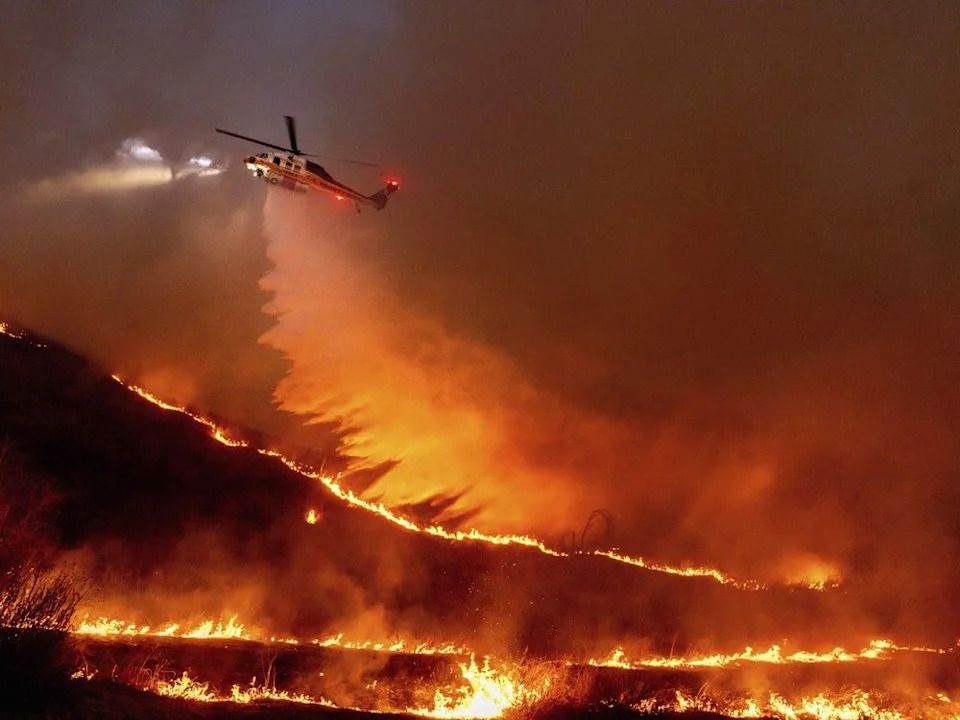
Water is dropped by helicopter on the Kenneth Fire in the West Hills section of Los Angeles, Jan. 9, 2025.
Wildfires, floods and cyclones among world’s costliest climate breakdown disasters of 2025
The 10 worst climate-related disasters of 2025 totalled more than US$120 billion in insured losses, according to an annual report from the international charity group Christian Aid.
Topping the list were the Palisades and Eaton Fires in Los Angeles in January, which caused 31 direct deaths and 400 related fatalities. The estimated cost of that disaster was $60 billion, according to the report.
Advertisement
Advertisement
Advertisement
Advertisement
Following that were cyclones in Southeast Asia, flooding in China, Hurricane Melissa (Jamaica, Cuba, Bahamas,) the monsoon season in India and Pakistan, drought in Brazil, ex-tropical cyclone Alfred and cyclone Garance, and the floods in Texas.
The report also looked at other notable climate-related disasters including wildfires in Spain, record ocean temperatures, record heat in Scotland, and drought in Canada, particularly the Atlantic provinces, which traditionally experience a cooler, wetter climate.
It notes that late summer and early fall saw an overwhelming majority of Canada classified as abnormally dry, indicating moderate to exceptional drought, including 80 per cent of the country’s agricultural landscape.
“These climate disasters are a warning of what lies ahead if we do not accelerate the transition away from fossil fuels,” said Patrick Watt, chief executive officer of Christian Aid, in a statement.
Advertisement
Advertisement
Advertisement
Advertisement
“They also underline the urgent need for adaptation, particularly in the global South, where resources are stretched and people are especially vulnerable to climate shocks.”
—Tiffany Crawford
Federal judge upholds Hawaii’s new climate change tax on cruise passengers: Associated Press
The Associated Press reports a federal judge’s ruling has cleared the way for Hawaii to include cruise ship passengers in a new tourist tax to help cope with climate change, a levy set to go into effect at the start of 2026.
U.S. District Judge Jill A. Otake denied a request Tuesday that sought to stop officials from enforcing the new law on cruises, the AP reports.
Hawaii Gov. Josh Green signed legislation in May that raises tax revenue to deal with eroding shorelines, wildfires and other climate problems. Officials estimate the tax will generate nearly $100 million annually, according to the report.
Advertisement
Advertisement
Advertisement
Advertisement
The levy increases rates on hotel room and vacation rental stays but also imposes a new 11 per cent tax on the gross fares paid by a cruise ship’s passengers, starting next year, prorated for the number of days the vessels are in Hawaii ports, the report said.
— AP
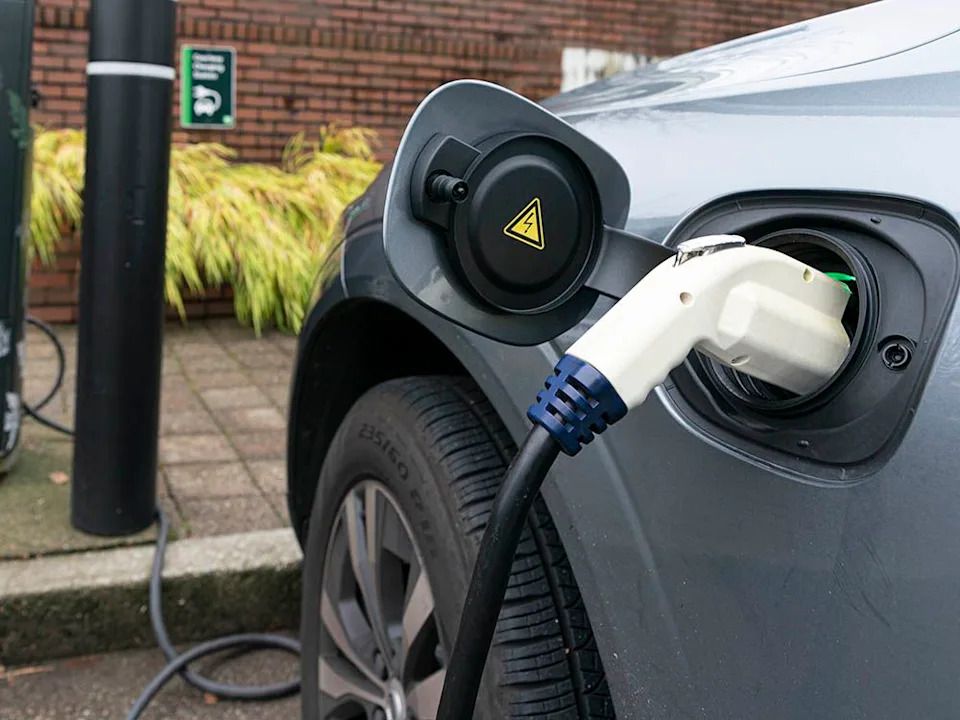
An electric vehicle at a charging station in a file photo.
Feds to reveal future of EV mandate in 2026, as Liberals urged to relent on 100 per cent target
As Prime Minister Mark Carney ushers in a new era of climate policy for the Liberals, a key decision is hanging over the governing party’s approach to electric vehicles.
Namely, will the 2035 sales mandate be kept or outright repealed?
The regulation requires manufacturers to hit certain sales targets for zero-emission vehicles, with those targets progressively rising until all new vehicle sales are zero emissions by 2035.
Advertisement
Advertisement
Advertisement
Advertisement
Keean Nembhard, a spokesman for Environment Minister Julie Dabrusin, said in a statement that “we will have more to share in the new year,” regarding the results of the 60-day review and the future of its zero-emission vehicle policy.
That timeline is beyond what some in the industry had expected, as automakers seek clarity on the regulation they spent this year urging Carney to repeal, citing the plummeting sales of electric vehicles and the ongoing Canada-U.S. trade war, where the auto industry has found itself on the front lines.
“We’re very disappointed that there has not been a decision communicated to the auto industry, and we’ve been urging the federal government and the prime minister to move quickly on this and make a decision,” said Brian Kingston, president and CEO of the Canadian Vehicle Manufacturers’ Association, which represents Ford, General Motors and Stellantis.
Read the full story here.
Advertisement
Advertisement
Advertisement
Advertisement
—Stephanie Taylor, National Post
Related
I’m a breaking news reporter but I’m also interested in writing stories about health, the environment, climate change and sustainable living, including zero-waste goals. If you have a story idea related to any of these topics please send an email to ticrawford@postmedia.com
تم ادراج الخبر والعهده على المصدر، الرجاء الكتابة الينا لاي توضبح - برجاء اخبارنا بريديا عن خروقات لحقوق النشر للغير


