اخبار العرب-كندا 24: الأحد 11 يناير 2026 10:44 صباحاً
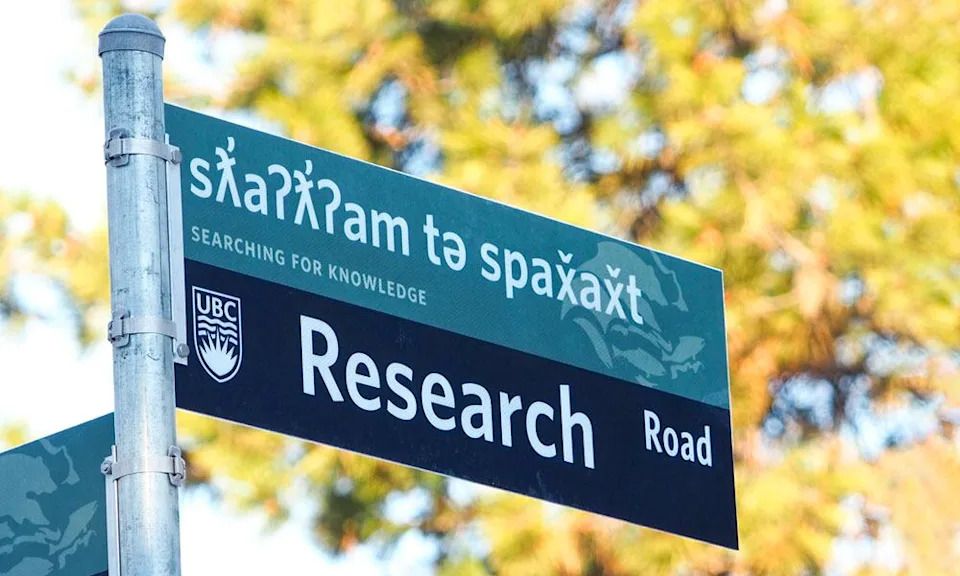
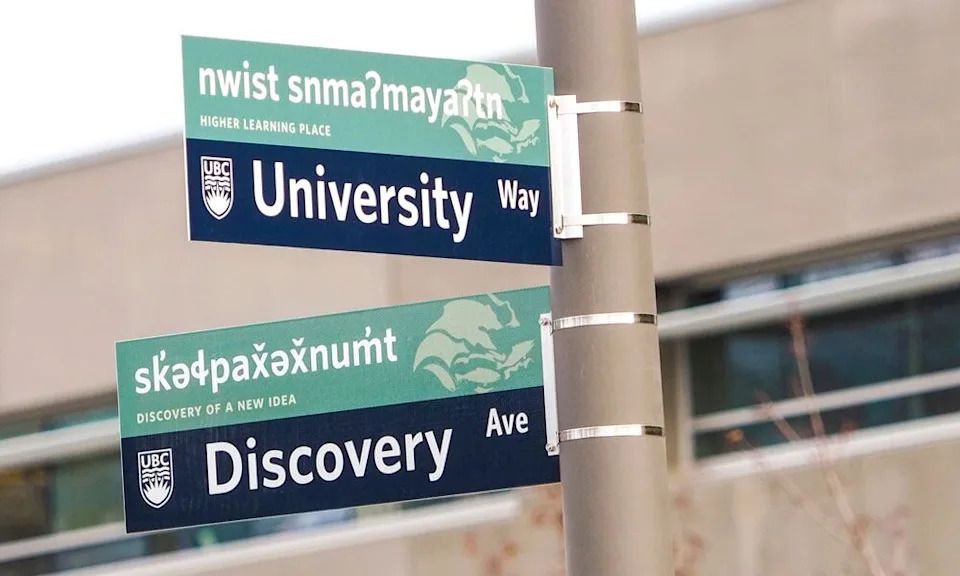
An ongoing project to add Nsyilxcn names to street signs at the University of B.C.’s Okanagan campus has supported two generations of Syilx Okanagan women to reconnect with their ancestors and reclaim their identity.
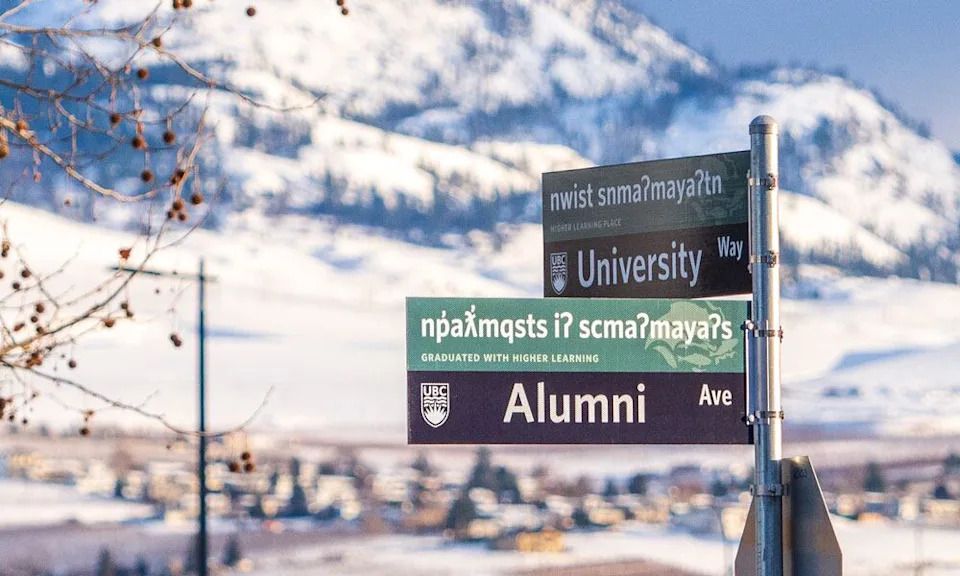
UBCO has been adding the language of the Syilx Okanagan nation to its campus street names for 15 years, with the names being interpretations of names like Alumni Avenue and University Way.
Nsyilxcn is the language of the Syilx Okanagan Nation, on whose unceded lands UBCO's campus sits.
Advertisement
Advertisement
Advertisement
Advertisement
Last year, Syilx Okanagan woman Llana Teichroeb and her daughter Kim Kosick made a pronounciation guide online using recordings of themselves saying a number of the street names.
New QR codes attached to the signposts link to the guide.
(UBC Okanagan)
The mother-daughter duo say they hope their project helps advance reconciliation efforts.
For Teichroeb, it also helped her reclaim a language that was forcefully stripped from residential school survivors like her grandmother.
“Essentially, for me, it was reclaiming my grandma's voice — but in the process, it reclaimed my voice and my identity, [a] piece of my identity that was missing too,” she said.
(UBC Okanagan)
Teichroeb said that English was the first language for both her and her daughter, so learning her ancestral language was like “retraining your muscles in your mouth” and developing a new way of thinking.
Advertisement
Advertisement
Advertisement
Advertisement
Kosick said she pushed for her mother and her to take the course together as it moved online during the COVID-19 pandemic.
(UBC Okanagan)
Her voice is what people will hear pronouncing the Nsyilxcn name for University Avenue and Alumni Avenue.
“One thing with the QR codes too, that helps with reconciliation, is it shows an active way for other students to engage with Nsyilxcn language, because it's not that easy to access,” she said.
3 generations on stage
It wasn’t just the two generations of Syilx Okanagan women that ended up imparting themselves on the QR code project.
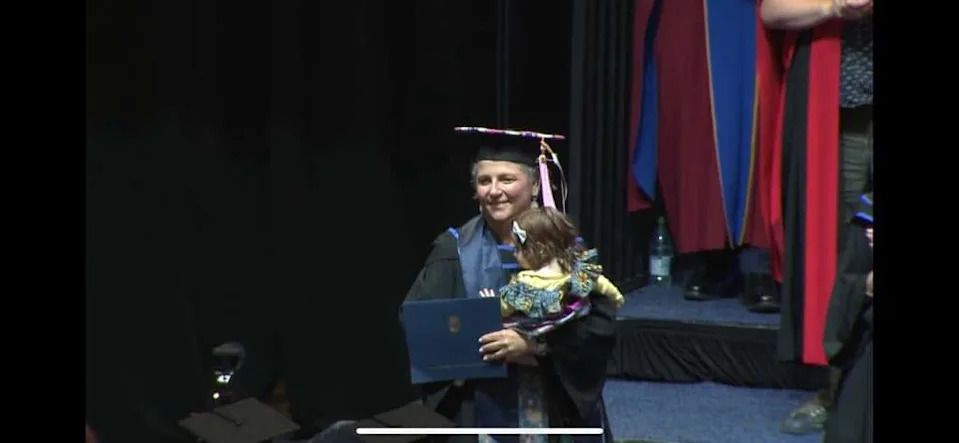
Kosick had two daughters during the four-year degree program, and in the first six months of their lives, they heard their mother and grandmother speaking Nsyilxcn on campus.
Advertisement
Advertisement
Advertisement
Advertisement
When Kosick and Teichroeb graduated in 2024, Kosick’s kids crossed the stage with them.
(Submitted by Kim Kosick)
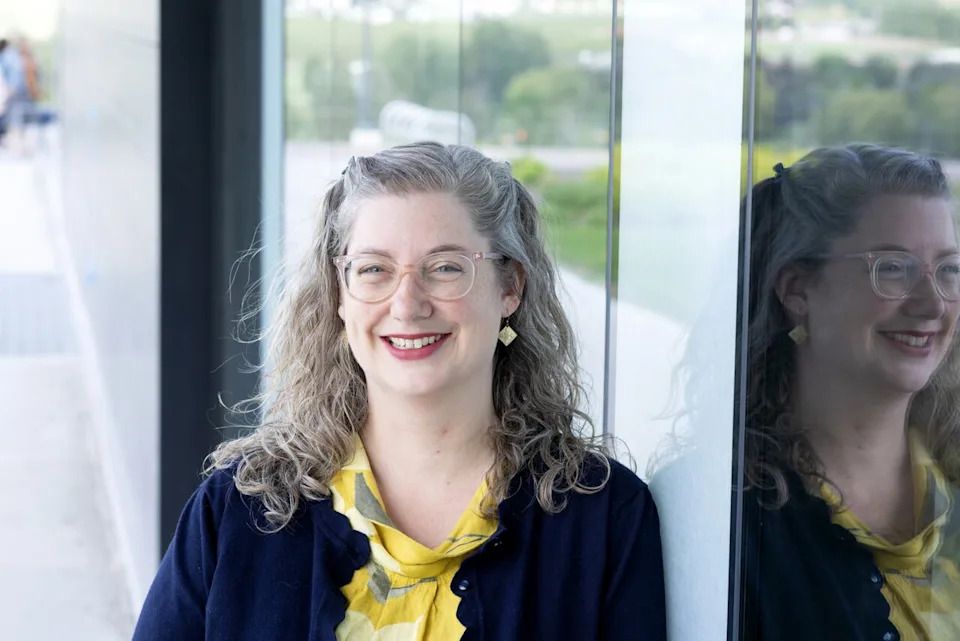
“It was very special to see, as a faculty member, to see the girls come on stage,” said Christine Schreyer, the pair’s professor who teaches anthropology at UBCO.
She says her students in the course have also recorded pronunciations for other words, like bathroom and library, that don’t yet have QR codes posted on signs — something she hopes to see happen in 2026 and beyond.
The professor says the QR codes provide an extra way for people to learn more about the Nsyilxcn language.
“This provides an opportunity for more people to connect with the sounds of the language that come from the land,” she said.
UBC Okanagan professor Christine Schreyer says her students recorded the pronunciations of an array of Nsyilxcn words. (Darren Hull)
In addition to Nsyilxcn language fluency, UBCO has since introduced courses for other Interior Salish languages like NłeɁkepmx and St’át’imc.
“When I taught all the [language] groups together, the students made podcasts about language revitalization. So hopefully those will be shared in the future as well,” Schreyer said.
تم ادراج الخبر والعهده على المصدر، الرجاء الكتابة الينا لاي توضبح - برجاء اخبارنا بريديا عن خروقات لحقوق النشر للغير


