




اخبار العرب-كندا 24: الأحد 28 ديسمبر 2025 06:20 صباحاً
The waters around the Queen Elizabeth Islands and western Tuvaijuittuq in Canada's High Arctic have long remained a mystery to scientists.
Often referred to as one of the last places in the world with year-round sea ice, these waters have historically been difficult to access because of the thickness of the ice.
But melting sea ice has opened a path for a Canadian research icebreaker to sail through some of these passageways for the first time ever.
Advertisement
Advertisement
Advertisement
Advertisement
“We have lost ice, we have increased the area of open water, and the area is now more navigable,” said David Babb, a research associate at the University of Manitoba’s Centre for Earth Observation Science.
On Sept. 4, scientists with Fisheries and Oceans Canada (DFO) and the University of Manitoba embarked on a four-week cruise aboard the CCGS Amundsen to study Arctic sea ice. In written responses to CBC News, DFO said the voyage represents the first comprehensive oceanographic research mission to reach this area of the Canadian Archipelago.
David Babb, one of the researchers on board the CCGS Amundsen this year, found some ice up to seven metres thick, but these were rare finds. (Alexandre Normandeau)
Babb, who was part of the expedition, explained that there are two types of ice: seasonal ice and multi-year ice. Seasonal ice generally grows over one winter, is thinner, and can lead to open water, whereas multi-year ice has thickened over multiple winters. He says there’s more seasonal ice nowadays and less of the multi-year ice.
Multiple studies suggest these Arctic is warming four times faster than anywhere else on Earth, and there are different estimates for how soon sea ice in the Arctic could disappear. Some suggest it could happen within this decade.
Advertisement
Advertisement
Advertisement
Advertisement
The fact that an icebreaker is able to enter one of the world’s last refuges of sea ice is yet another startling sign of the effects of climate change. But it also presents an opportunity for scientists like Babb to learn more about this “understudied” part of the Arctic.
“This allows us to sort of understand what is happening in this area right now and guide projections on what is going to happen into the future,” Babb said.
'Really deteriorated and heavily melted sea ice'
On board the ship, Babb was surprised, at first, by the lack of thick ice, fish and organic matter like tiny phytoplankton in the Arctic waters, particularly around Nansen Sound and Greely Fjord.
Advertisement
Advertisement
Advertisement
Advertisement
The thickest ice they found was around seven metres, but Babb says these were difficult finds.
“We were finding really deteriorated and heavily melted sea ice.... Fortunately, both scientifically and personally, it was reassuring to know that we did start to find some thicker ice [further south],” he said.
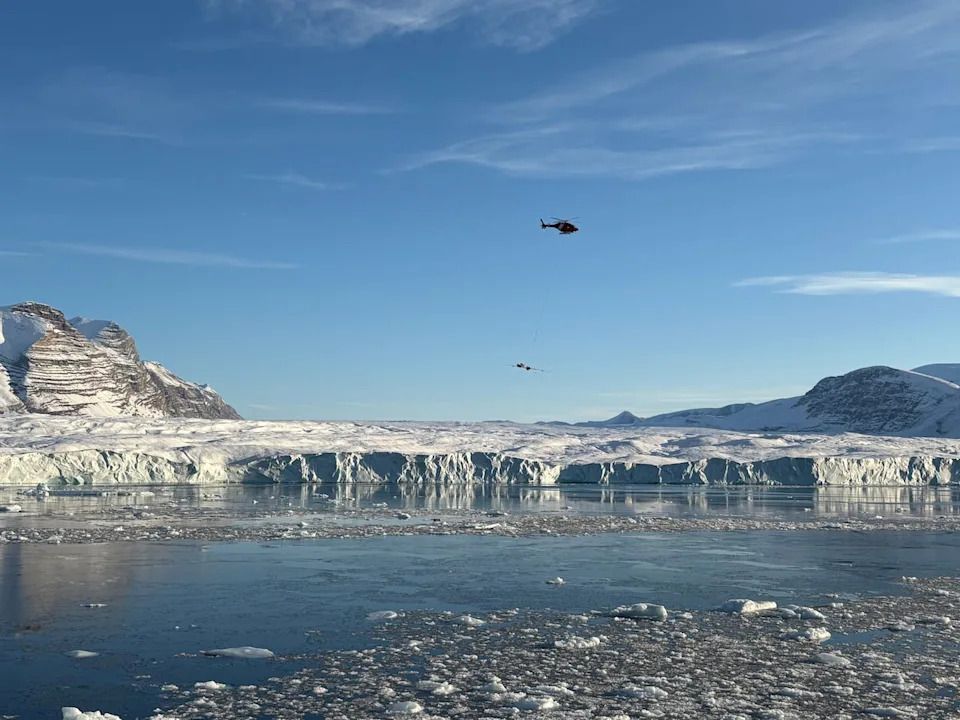
Researchers with the University of Manitoba are looking to do more studies in Canada's Arctic Archipelago. The CCGS Amundsen, a Canadian Coast Guard ship, acts as a home base for scientists venturing out onto the ice or flying overhead for surveying. (Amundsen Science)
Despite this area being several hundred kilometres away from the nearest Nunavut communities, like Grise Fiord and Resolute Bay, Babb says what happens up in the High Arctic will ripple down south where there are larger fisheries in operation.
At the end of their expedition in October, the team attended a science day at Resolute Bay’s Qarmartalik School to show some of their work and exchange knowledge with the community.
Advertisement
Advertisement
Advertisement
Advertisement
Grade 11 student Kupaaq Idlout says he learned a lot about the presence of mercury and phytoplankton in the ocean. He was most surprised to hear about “the amount of salt in different areas [of Nunavut] even though they are so close together.” The National Snow and Ice Data Centre at the University of Colorado Boulder explains that older, thicker sea ice tends to have a lower salt concentration.
Researchers on board the CCGS Amundsen stopped by the Qarmartalik School's science day to share some of their findings from their expedition, as well as hear from the community about their observations. (Submitted by Rhonda McKenzie)
Teacher Rhonda McKenzie says she also hears community members talk about the changing ice conditions.
“Some of the elders have told me that the ice is melting faster and that they could have traveled by sled to certain islands or places longer into the year … but now it’s kind of different,” she said.
Babb says they’re pushing to get community members to help measure ice thickness when they’re out on the land, and hopefully some will join their voyage next year.
“They live on the land, they live on the ice, they spend a lot of time on the water. They have these intangible observations that we can't collect,” he said.
تم ادراج الخبر والعهده على المصدر، الرجاء الكتابة الينا لاي توضبح - برجاء اخبارنا بريديا عن خروقات لحقوق النشر للغير


