



اخبار العرب-كندا 24: الأحد 14 ديسمبر 2025 04:20 صباحاً
It doesn’t take long to find echoes of disappointment on the Rosalía subreddit: fan after fan, desperate to see her forthcoming world tour, chronicle how hard it was to secure tickets.
According to several posts, tickets for shows in cities like London, Barcelona, Toronto and Mexico City sold out within minutes of the general sale.
“I’m so shocked at how quickly Toronto tickets sold. I started at 352 in the queue this morning and there were barely any tickets left for sale when they let me in,” one Reddit user said in the Rosalía subreddit.
Advertisement
Advertisement
Advertisement
Advertisement
Rosalía’s album LUX was an instant success, with legendary composer Andrew Lloyd Webber even declaring it the “album of the decade.” The 33-year-old from Barcelona is undeniably famous, with nearly 30 million followers on Instagram. Still, that’s a far cry from Taylor Swift’s 281 million followers and the hype that accompanied her Eras tour. For comparison, Olivia Dean has about 3.4 million followers, and her arena tour sold out as well.
Most people are familiar with the pains associated with buying tickets for high-profile events. Face-value tickets can be expensive — if they’re even available. And often, tickets sell out fast, only to pop up on resale sites, where they’re sold for exorbitant prices. It’s also hard to tell how tickets are allocated between presales and general sales, making ticket purchasing a time-consuming and confusing process, multiple fans told CBC News.
But there are ways to push back, experts say — especially as fans and artists themselves voice increasing dissatisfaction with the system — from better controls on pricing to diversifying the market for venues and ticket sellers.
Veronica Ing, a 32-year-old based in Toronto, said she used to go to several concerts every year. “Now I can do one — maybe — and sometimes it’s zero,” Ing told CBC News. “Concertgoers are going up against scarcity and fomo.”
Advertisement
Advertisement
Advertisement
Advertisement
Her friend, Angie Liu, said she feels she “overpaid” for Kendrick Lamar and Sza’s Grand National tour. “It was a stressful experience getting the tickets,” Liu said. She added that dynamic pricing, which sets prices based on demand, made costs unstable, too.
“Experiences are going to the highest bidder, which makes them fundamentally inaccessible,” Vass Bednar, the managing director of the Canadian SHIELD Institute, told CBC News.
So, what would it take to make events accessible? Experts say it’s complicated, but there are policy options that could lead to change.
“There are two issues we’re all up against,” Bednar said. “First is how quickly so many tickets are taken out of the primary ticket market and how hard it is to get a primary ticket. Then, there is a resale market, which preys on our loyalty and affinity.”
Advertisement
Advertisement
Advertisement
Advertisement
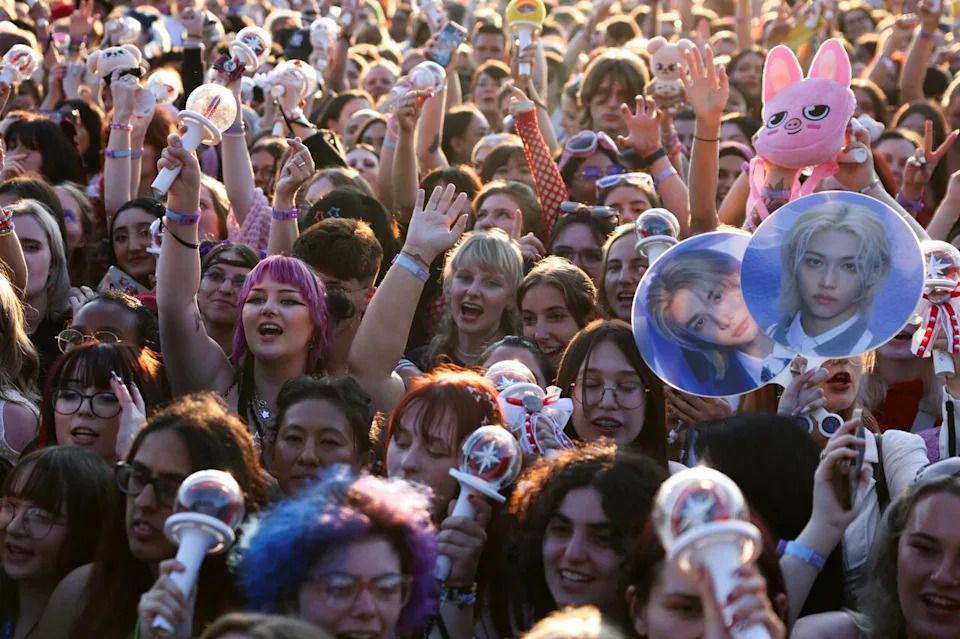
Ali Ditner is a big K-Pop fan — Stray Kids, especially — and she says getting tickets to their shows is “insane.”
“Fans who don't have that disposable income are not able to attend the concert and it’s not for lack of seats — there are enough,” Ditner said, adding that she's noticed rows and rows of empty seats at “sold out” shows, many of which may have been hoarded by scalpers.
Crowd of fans seen ahead of Stray Kids festival show last year at Hyde Park in London, U.K. (Hollie Adams/Reuters)
Legislation 'worth trying'
Bednar says there are two policy levers that could help Canadians: “Capping or curbing resale, so that you can only pass a ticket on at face value. More anti-scalping legislation.”
Advertisement
Advertisement
Advertisement
Advertisement
“This isn’t a Canada problem,” Bednar said. “This is a global problem.”
The U.K. government recently introduced legislation that would make it illegal to resell tickets for more than their original face value. Big names like Dua Lipa, Coldplay and Radiohead had previously appealed to U.K. Prime Minister Keir Starmer to crack down on resellers.
People may find ways to work around legislation and exploit fans, according to University of Alberta associate professor Brian Fauteux, an expert in popular music and media studies.
Still, he says legislation is “worth trying.”
“Through a lot of the research we’ve been doing, it comes back to a bigger problem: very little competition in music industries.”
Advertisement
Advertisement
Advertisement
Advertisement
Ticketmaster and its parent company Live Nation enjoy the lion’s share of influence over the live music business, which spans venues, ticketing and touring. As a result, Fauteux said, regulating how ticketing works is only part of the story.
“Few players control how things work,” he said. “How do we build and sustain a wider variety of venues and music infrastructure?"
Attempts at change
There have been some attempts. In the U.K., for example, the government backed a voluntary one pound ($1.84 Cdn) levy for stadium and arena show tickets that have a capacity of 5,000 or more. That money is funnelled to smaller, grassroots venues that host smaller shows.
Advertisement
Advertisement
Advertisement
Advertisement
The iconic Royal Albert Hall announced its plan to implement the small charge in July, but many major venues are yet to buy in — and it’s possible that they won’t since it isn’t mandatory.
And while options are limited, fans can sometimes take advantage of alternative ticketing platforms. In the Rosalía subreddit, fans strategized whether to purchase from AXS or Ticketmaster, depending on prices, availability and wait times. In some cases, fans can purchase tickets directly from venues, like Toronto’s Massey Hall.
The situation, which many experts call a monopoly, makes change difficult. Improvement likely requires a combination of government policy, pushback from big name artists and fans speaking out.
"It's not up to us to solve what is increasingly an abuse of market power that's occurring, but I think the more people are able to recognize it — and have a vocabulary around it — that gets really powerful," Bednar said.
Advertisement
Advertisement
Advertisement
Advertisement
Ticketmaster vowed a crackdown on large-scale scalpers who buy up tickets using hundreds, if not thousands, of fake accounts after the U.S. Federal Trade Commission filed a lawsuit naming Ticketmaster and Live Nation in September.
“It has gotten out of hand, especially since scalpers developed automated tools for creating Ticketmaster accounts,” Live Nation wrote to U.S. lawmakers at the time. “Given the level of abuse we are now seeing, we are no longer permitting this.”
Still, skepticism remains. A previous CBC/Toronto Star investigation, referenced by the FTC suit, found Ticketmaster previously profited heavily from scalping.
Many fans praised Olivia Dean, seen here at London Fashion Week earlier this year, for pushing back against what she called the 'vile' resale market that inflated tickets for her tour. (Katie Collins/Reuters)
Artist-led action
In the meantime, many artists have taken matters into their own hands.
Advertisement
Advertisement
Advertisement
Advertisement
Olivia Dean recently lambasted Ticketmaster and Live Nation for the “vile” reselling market.
Ultimately, Dean’s decision to speak out led to Ticketmaster partially refunding fans who paid inflated prices for resale tickets and imposing resale caps.
“We share Olivia’s desire to keep live music accessible and ensure fans have the best access to affordable tickets,” Michael Rapino, CEO of Live Nation Entertainment, in the company’s statement, told CBC News at the time. “While we can’t require other marketplaces to honor artists’ resale preferences, we echo Olivia’s call to ‘Do Better’ and have taken steps to lead by example.”
Dean is not the only example of an artist pushing back — signalling hope for fans like Liu and Ing. Hayley Williams recently tried to sidestep scalpers by implementing a presale ticket plan that included verification steps and made it harder for large-scale scalpers to buy tickets.
Advertisement
Advertisement
Advertisement
Advertisement
She also placed parameters around resales.
Liu bought tickets to Williams’s forthcoming Toronto show and said the experience was surprisingly smooth — much better than her experience with Kendrick and Sza.
“I was maybe 400 in the queue and then from there it went pretty quickly and prices were pretty good,” Liu said, noting that a single ticket cost less than $100.
“I actually don't know how she kept it so unilaterally low,” Liu said. “I was like, ‘OK, if they can do this, what is stopping every other artist from doing this?’”
تم ادراج الخبر والعهده على المصدر، الرجاء الكتابة الينا لاي توضبح - برجاء اخبارنا بريديا عن خروقات لحقوق النشر للغير


