


اخبار العرب-كندا 24: الخميس 4 ديسمبر 2025 09:44 صباحاً
Alberta’s premier is floating the idea of making oil and gas companies pay a deposit before they can drill a new well, a requirement which hasn’t been in place in decades and has often been resisted by industry.
The provincial government is looking at ways to address the large number of old oil and gas wells which require cleanup.
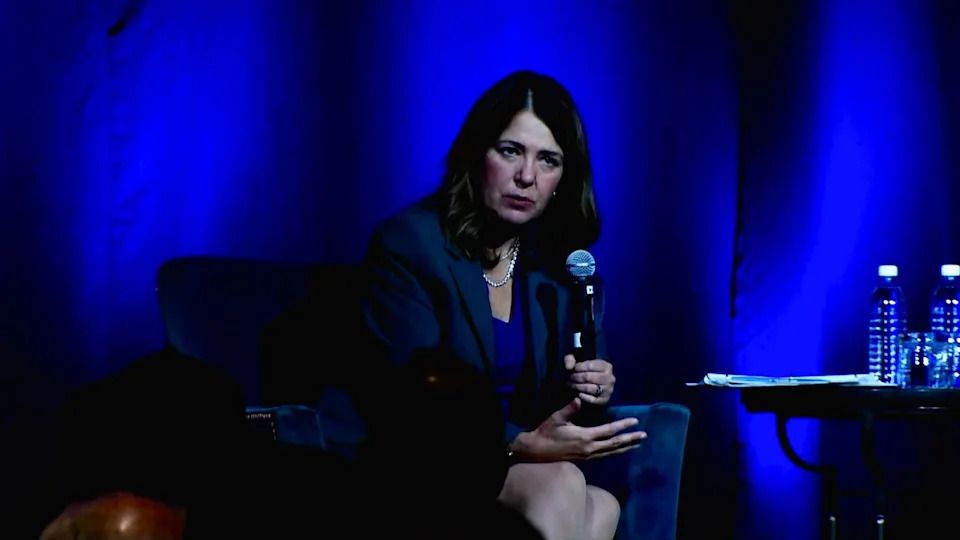
To help prevent the problem from increasing further, Danielle Smith said companies should set aside some money up front, suggesting $10,000 per well, while speaking at an industry event this week.
Advertisement
Advertisement
Advertisement
Advertisement
"They've got to put a little bit of money aside so that by the time it's at its end of life, the money is there to be able to clean it up,” said Smith, during a question and answer session on stage in front of 800 people at the Canadian Association of Energy Contractors event in downtown Calgary.
If a company paid a $10,000 deposit, the amount would grow and compound with interest over time, Smith said, so when the well is no longer producing oil or natural gas, “the money would be there" to help cover reclamation costs.
"I hope that we can find a way to get to a resolution on that,” said Smith, as conversations with industry continue.
Industry pushback
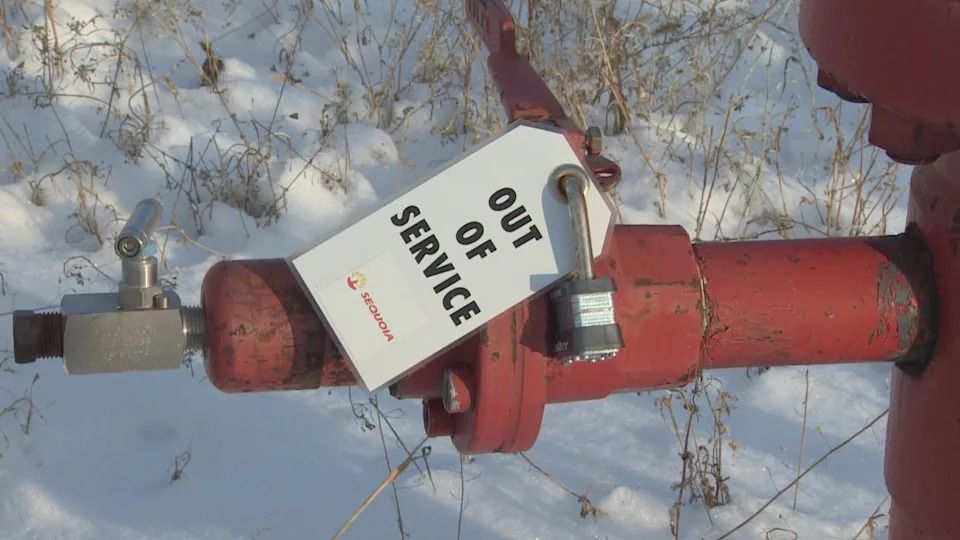
Currently, there are nearly 250,000 old wells and other infrastructure that are inactive or marginally producing any oil or gas.
Advertisement
Advertisement
Advertisement
Advertisement
At the same time, the Orphan Well Association (OWA) has a record-high number of wells in need of cleanup. The OWA is an industry-funded group responsible for the reclamation of wells that no longer have an owner after a company goes bankrupt.
(Mike Symington/CBC)
Smith’s suggestion of a deposit is not a bad idea, said Shaun Fluker, professor of law at the University of Calgary.
However, he’s skeptical the proposal will ever become reality.
"Quite frankly, I'm not personally going to get too excited,” said Fluker. "Until I see something tangible in that regard, I just think those comments are hot air.”
Alberta previously had a legal requirement that a company had to provide a deposit when applying for a new well licence, but the requirement was rescinded in 1986.
Advertisement
Advertisement
Advertisement
Advertisement
Fluker co-wrote a 2023 research paper on the issue, which described the orphan and inactive wells as a “made-in-Alberta failure.”
"There are other instances between then and now where industry has pushed back against programs that would probably have prevented us from being in the mess we're in today,” said Fluker. “Every time the province backs down.”
Some oil and gas industry groups have opposed such policies by arguing they will cause financial hardship on some smaller companies and cause an increase in bankruptcies.
“We have to wait for an official announcement before offering any comments,” said Elisabeth Besson, spokesperson for the Canadian Association of Petroleum Producers, in an emailed statement regarding the premier’s comments.
$10K not enough, says landowner
Some jurisdictions, such as North Dakota, require companies to pay a bond of at least $50,000 US for each new well.
Advertisement
Advertisement
Advertisement
Advertisement
Smith’s proposal is too little, too late, and doesn’t address the massive number of wells needing to be cleaned up, said Dwight Popowich, chairman of the Polluter Pay Federation and a landowner with an orphan well.
Popowich says $10,000 is too small an amount and there are still no timelines compelling companies to do the reclamation work.
"To me, it's just smoke and mirrors. That's what she's doing here. There is a problem, she admits there's a problem, but this is not how you properly fix it,” he said.
This oil well near Two Hills, Alta., has been inactive since 2012 and sits on the land of Dwight Popowich, who wonders when it will eventually be cleaned up. (Kyle Bakx/CBC)
He’d rather industry be required to contribute higher annual fees to fund the OWA, so orphan wells are cleaned up much faster.
Advertisement
Advertisement
Advertisement
Advertisement
The OWA is funded largely through an annual levy determined by the Alberta Energy Regulator (AER) and paid by the oil and gas industry. The levy was increased two years ago to $135 million.
OWA officials have said they expect the AER will increase the levy again as the number of orphans has climbed.
The AER has made regulatory changes in recent years in an attempt to curb the number of orphan wells.
Further changes could include the 21 recommendations listed in a report that was commissioned by the provincial government and released in April. The report included consultation with Indigenous groups, landowners and industry, among other stakeholders.
Advertisement
Advertisement
Advertisement
Advertisement
The initiative was led by David Yager, a special advisor the the premier.
Recommendation number 16 of the report alludes to the need for companies to pay a deposit before drilling a new well: “Enable asset-attached closure funding mechanisms and establish working group for third-party end-of-life liability models,” the report states.
تم ادراج الخبر والعهده على المصدر، الرجاء الكتابة الينا لاي توضبح - برجاء اخبارنا بريديا عن خروقات لحقوق النشر للغير


