


اخبار العرب-كندا 24: الأحد 11 يناير 2026 10:08 صباحاً
The owner of Big Bang Cider in Nanaimo is pushing back on a property assessment that newly classified about 800 metres of his farm as "light industrial."
B.C. Assessment, which classifies and values properties across the province, sends owners an assessment each year.
For Colin Rombough, who has owned a farm with his wife since 2019 and operated a cidery since 2024, this year's notice from the Crown corporation brought unwelcome news.
Advertisement
Advertisement
Advertisement
Advertisement
The agency's reclassification of a portion of their land, he says, could mean their property taxes rise by 300 to 500 per cent.
Furthermore, he says the new classification isn't in line with how other government regulatory branches have classified his property.
He says that while B.C. Assessment may now classify a portion of his property as light industrial use, he’s unsure of the implications that could have with the local municipality, the Regional District of Nanaimo, which has zoned his property for agricultural use — which he says doesn’t allow for industrial use.
To top it off, he’s considered a food provider by the Vancouver Island Health Authority, but still must operate under the Agricultural Land Commission (ALC) as a farm.
Advertisement
Advertisement
Advertisement
Advertisement
“Every single one of those government organizations asks a different thing, and they're often asking contradictory things, and they're all not talking to each other,” Rombough said.
Having multiple branches of government define farms differently creates business uncertainty, he said.
“How do I, as a business owner and as a farmer, navigate that?”
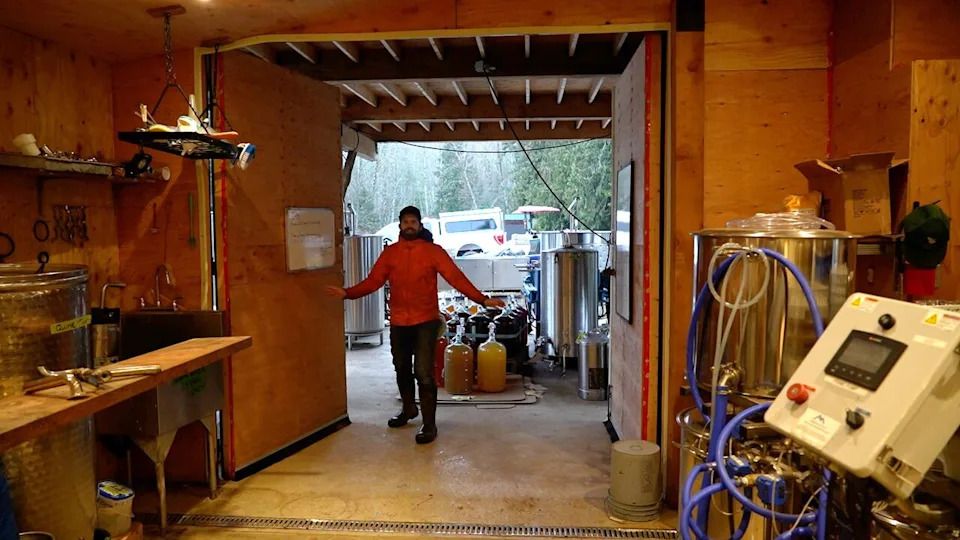
Rombough stands in the building that was added to the property that led to the reclassification, which is used to process the apples from the farm and turn them into cider. (Claire Palmer/CBC)
Rombough says the building that B.C. Assessment says turns his cidery into a light industrial property is primarily used for washing, sorting, crushing, juicing and storing the apples grown from the orchard, and that the fermentation process used for the cider isn’t industrial, but natural.
These activities, he says, are core components of a qualifying farm operation under the ALC — and that for his farm to be profitable, he must sell his cider, and in order to qualify as a "farm cidery," he's legally required to maintain two hectares of apple orchard.
Advertisement
Advertisement
Advertisement
Advertisement
"Why is B.C. Assessment ignoring the legal reality that I have to operate under?”
For B.C. Assessment, it’s a bit more black and white.
Maurice Primeau, a deputy assessor with B.C. Assessment, says that alcohol production falls under excluded uses for farm regulations, so land under and around the building was removed from farm classification.
“From B.C. Assessment's position, we rely on the legislation as it is written — in all circumstances, we default to the legislation to guide us in our decision making,” Primeau said.
"B.C. Assessment takes a very focused approach when it comes to classification, and we strive for equity."
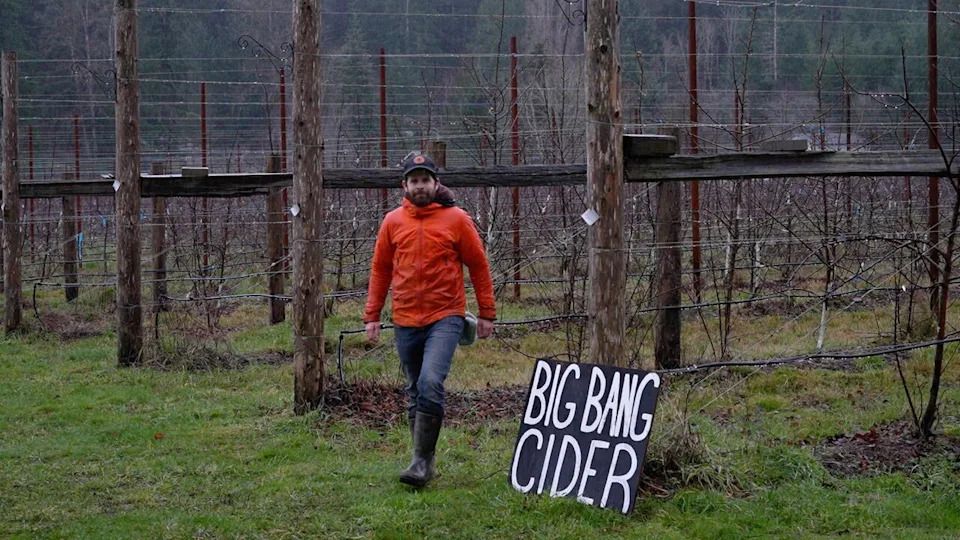
Rombough purchased the land in 2019 with the intention of turning it into a farm, planting the apple orchard and installing the irrigation system himself. The cidery opened in the summer of 2024. (Claire Palmer/CBC)
But Rombough believes the assessment of his property didn't take the spirit of the Assessment Act into consideration and points to dairy farms as an example.
Advertisement
Advertisement
Advertisement
Advertisement
“Many of them have multimillion-dollar, 10,000 square-foot robotic milking barns, and that is considered farm, but my small, little building with a couple stainless steel tanks and some barrels and a press to process my apples is considered a light industrial facility, and is going to be taxed to that effect,” he said.
Primeau says that it’s not uncommon for properties to have multiple classifications and that the re-classification of the property is in line with other commercial wineries.
But Rombough says that even within the B.C. Liquor Commission, there are different classifications between different-sized wineries and cidery operations, each with their own regulations that need to be met, and that a blanket approach isn’t the way forward. He says his farm cidery shouldn't be put in the same category as a big winery in the Okanagan.
Appeals for B.C. Assessment notices can be filed until Feb. 2, which Rombough intends to do.
تم ادراج الخبر والعهده على المصدر، الرجاء الكتابة الينا لاي توضبح - برجاء اخبارنا بريديا عن خروقات لحقوق النشر للغير


