



اخبار العرب-كندا 24: السبت 10 يناير 2026 04:56 مساءً
Here’s the latest news concerning climate change and biodiversity loss in B.C. and around the world, from the steps leaders are taking to address the problems, to all the up-to-date science.
Check back every Saturday for more climate and environmental news or sign up for our Sunrise newsletter HERE.
In climate news this week:
• Province’s zombie wildfires still burning underground
• Roberts Bank not an easier option for Alberta’s pipeline, say conservationists
• Trump deals climate blow by exiting crucial UN bodies
• As Trump destroys climate programs, Gates warns ‘market forces’ not enough
Advertisement
Advertisement
Advertisement
Advertisement
Human activities like burning fossil fuels and farming livestock are the main drivers of climate change, according to the UN’s intergovernmental panel on climate change. This causes heat-trapping greenhouse gas levels in Earth’s atmosphere, increasing the planet’s surface temperature.
The panel, which is made up of scientists from around the world, including researchers from B.C., has warned for decades that wildfires and severe weather, such as the province’s deadly heat dome and catastrophic flooding in 2021, would become more frequent and intense because of the climate emergency. It has issued a code red for humanity and warns the window to limit warming to 1.5 C above pre-industrial times is closing.
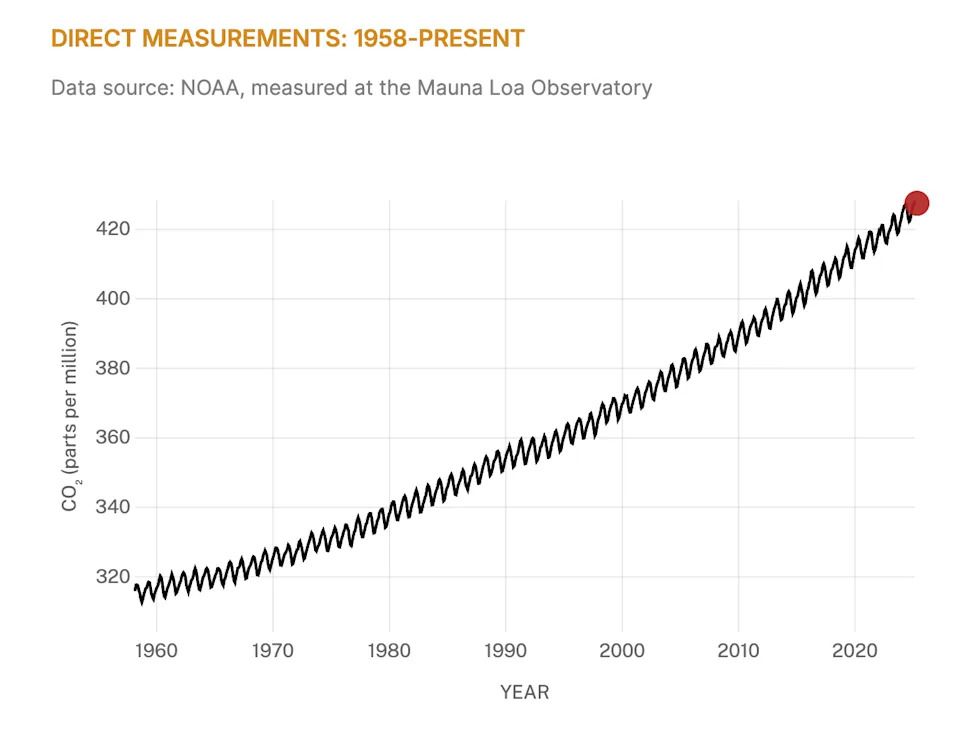
According to NASA climate scientists, human activities have raised the atmosphere’s carbon dioxide content by 50 per cent in less than 200 years, and “there is unequivocal evidence that Earth is warming at an unprecedented rate.”
As of Jan 5, carbon dioxide in the atmosphere was 427.49 parts per million, up slightly from 426.46 ppm the previous month, according to the latest available data from the NOAA measured at the Mauna Loa Observatory, a global atmosphere monitoring lab in Hawaii. The NOAA notes there has been a steady rise in CO2 from under 320 ppm in 1960.
Carbon dioxide in the atmosphere warms the planet, causing climate change. Human activities have raised the atmosphere’s carbon dioxide content by 50% in less than 200 years, according to NASA.
Quick facts:
• The global average temperature in 2023 reached 1.48 C higher than the pre-industrial average, according to the EU’s Copernicus Climate Change Service. In 2024, it breached the 1.5 C threshold at 1.55 C.
• 2025 is set to be the second or third warmest years on record after 2024, capping the 11th consecutive warmest years.
• Human activities have raised atmospheric concentrations of CO2 by nearly 49 per cent above pre-industrial levels starting in 1850.
• The world is not on track to meet the Paris Agreement target to keep global temperature from exceeding 1.5 C above pre-industrial levels, the upper limit to avoid the worst fallout from climate change including sea level rise, and more intense drought, heat waves and wildfires.
• UNEP’s 2025 Emissions Gap Report, released in early December, shows that even if countries meet emissions targets, global temperatures could still rise by 2.3 C to 2.5 C this century.
• In June 2025, global concentrations of carbon dioxide exceeded 430 parts per million, a record high.
• There is global scientific consensus that the climate is warming and that humans are the cause.
Advertisement
Advertisement
Advertisement
Advertisement
(Sources: United Nations IPCC, World Meteorological Organization, UNEP’s 2025 emissions gap report, NASA, Copernicus Climate Change Service, climatedata.ca)
Latest News
Lower Mainland’s Roberts Bank not necessarily easier option for Alberta to B.C. bitumen pipeline
Conservation groups in B.C. are warning that building a new bitumen pipeline from Alberta to a tidewater terminal at Roberts Bank in the Lower Mainland wouldn’t be a less contentious option than a new pipeline on B.C.’s North Coast.
Alberta is weighing the technical details of three routes, including one to the Lower Mainland, which could be seen to sidestep Canada’s moratorium on oil tanker traffic on B.C.’s North Coast as it puts a pipeline proposal together under the agreement signed with Ottawa.
A new terminal at Roberts Bank in Delta, however, would layer the impacts of another major project on a sensitive environment that is already stressed by existing development, groups such as Ecojustice contend.
Advertisement
Advertisement
Advertisement
Advertisement
The Port of Vancouver’s $3.5 billion Roberts Bank Terminal 2 project, which is slated to add a second terminal to double container traffic at Deltaport, was approved in 2023 with acknowledgment that the development would cause “adverse residual and cumulative effects” on juvenile chinook salmon and endangered southern resident killer whales.
A Federal Court judge in 2025 dismissed an appeal of that decision by conservation groups, but a lawyer from the non-profit organization that represented them said a new proposal would face all the same issues that Terminal 2 dealt with in its review before the Impact Assessment Agency. The owner of Deltaport is suing because the port won’t permit an expansion of Deltaport.
Read the full story here.
—Derrick Penner
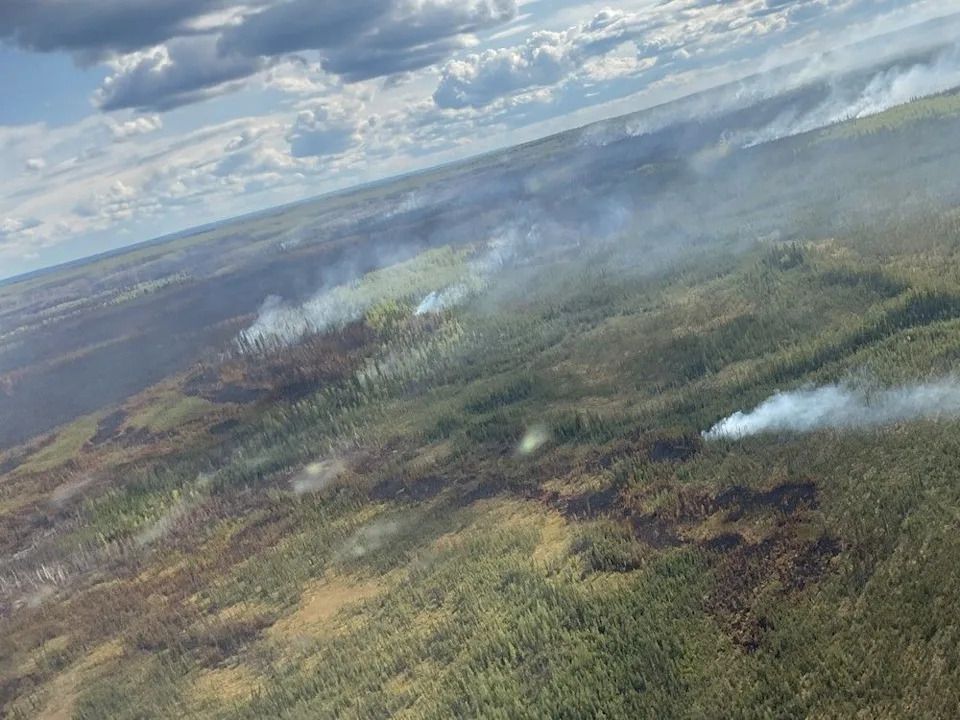
An overwintering (also called zombie) wildfire sparks into new life in B.C. in May.
B.C.’s zombie fires are burning deep underground. Here’s how they could spark back to life in 2026
The intense 2025 wildfire season in B.C. means firefighters will face challenges in 2026 because of overwintering wildfires, also called holdover or zombie fires, that smoulder deep underground through the colder season.
Advertisement
Advertisement
Advertisement
Advertisement
As they spread below the forest floor in the dried-out peat, the fires can ignite in spring, sparking new life into last season’s devastating blazes.
Canada’s 2025 wildfire season was the second-worst on record after 2023, with more than 6,000 fires burning more than 83,000 square kilometres across Canada, according to the Canadian Interagency Forest Fire Centre.
In B.C., the season started early because of several zombie fires in the northeast region of the province, where fire officials say overwintering fires and underlying drought combined to create challenging conditions in April and May.
The unseasonably dry fuels and high winds led to the rapid spread of several new and existing wildfires, triggering evacuation orders and alerts.
Advertisement
Advertisement
Advertisement
Advertisement
Scientists say climate change is making B.C.’s wildfire season longer and more intense as drought dries out the forest floor and heat waves become stronger.
For more on the situation read here.
—Tiffany Crawford
Huge increase in drift logs damaging B.C.’s intertidal zone, study finds
Drift logs grinding up and down the rocky shoreline every day are causing serious damage to B.C.’s intertidal zone, a study published in the Marine Ecology journal has found.
The study states the destructive effect of drift logs on several rocky shore intertidal communities was first identified in 1971, but “has received little further attention despite its ecological and conservational significance.”
Advertisement
Advertisement
Advertisement
Advertisement
Using satellite imagery, the study authors examined 202 sites along the B.C. coastline and found on average 311 logs per kilometre on sandy shores and 194 logs per kilometre on rocky shores. One rocky site recorded 1,238 logs in one kilometre, while it was estimated there are 450,000 drift logs on the Vancouver Island coast.
“Historical analyses of archival photographs reveal a 520 per cent increase in drift log abundance since the late 19th century and an estimated 800 per cent increase since pre-European settlement, trends that correlate with the expansion of forestry operations over the past century,” the report states.
It found the abundance of barnacles — which are an essential food source — was much less on log-exposed areas compared to crevices not impacted by log grind.
Read the full story here.
Advertisement
Advertisement
Advertisement
Advertisement
—David Carrigg
Trump deals climate blow by exiting crucial UN bodies
President Donald Trump extended the U.S. retreat from global co-operation on climate action by signalling a withdrawal from flagship international organizations, including the main United Nations and scientific bodies focused on the issue.
The Intergovernmental Panel on Climate Change and the UN Framework Convention on Climate Change are among a total of 66 groups the U.S. will exit, spanning multiple sectors. The climate moves are seen as likely to diminish the U.S. role in addressing greenhouse gas emissions, and significantly limit the global influence of those entities.
Trump’s actions are in line with his domestic policy changes aimed at removing curbs on pollution and fossil fuels, and follow a decision in January 2025 to begin a year-long process to quit the Paris Agreement, the binding 2015 accord to combat global warming. He made a similar decision during his first term in office.
Advertisement
Advertisement
Advertisement
Advertisement
The move is a “gift to China and a get out of jail free card to countries and polluters who want to avoid responsibility,” said John Kerry, a former U.S. secretary of state and special presidential envoy for climate during the Biden administration. “It’s another self-inflicted wound on the world stage.”
Simon Stiell, executive secretary of the UNFCCC, in a statement Thursday called the move “a colossal own goal that will leave the U.S. less secure and less prosperous.”
Read the full story here.
—Bloomberg
Microsoft founder Bill Gates. Photo: Getty Images.
As Trump destroys climate programs, Gates warns ‘market forces’ not enough
Bill Gates is warning that the market alone cannot solve climate change, just as President Donald Trump pulls the U.S. out of key global climate organizations.
Advertisement
Advertisement
Advertisement
Advertisement
“Government policies in rich countries are still critical because unless innovations reach scale, the costs won’t come down and we won’t achieve the impact we need,” the billionaire founder of Microsoft Corp. wrote in his annual lookahead letter released on Friday.
According to Gates, who founded Breakthrough Energy Ventures to bankroll climate-focused startups, “market forces do not properly incentivize the creation of technologies to reduce climate-related emissions” at a time when carbon pollution isn’t being priced in most countries. Without cutting greenhouse gases, the world will fail to lower the risks of global warming.
“If we don’t limit climate change, it will join poverty and infectious disease in causing enormous suffering, especially for the world’s poorest people,” Gates wrote. “Since even in the best case, the temperature will continue to go up, we also need to innovate to minimize the negative impacts.”
The latest letter comes about two months after Gates was criticized by some activists and small island states when he said prioritizing the climate fight above all else risks overshadowing issues such as health and equality. In the Friday memo, Gates reiterated his call for the world to focus more on adapting to climate impacts.
Advertisement
Advertisement
Advertisement
Advertisement
Read the full story here.
—Bloomberg
With meat prices rising, some are going vegan to save money
For Hugh Goldring, swapping out meat and chicken for lentils and chickpeas isn’t something completely new. But as the cost of his grocery bills rises, along with the rest of Canadians, it’s a diet change he’s doing more frequently to save money.
In Canada, food prices have increased 27 per cent over five years and are forecast to rise six per cent more in 2026, according to the most recent Canada Food Price Report.
“A huge can of beans costs $2, and any meat that won’t poison you outright is expensive,” Goldring said. “It’s motivated in a meaningful way by cost.”
Advertisement
Advertisement
Advertisement
Advertisement
So, instead of buying stewing beef, Goldring blends up high-protein chickpeas to make cheese-like pasta sauces and purées beans into vegan curries with coconut milk and vegetables.
Climate change is the main catalyst for rising animal food costs as it has complicated supply chains from farmers to consumers, he said. He added that he predicted the price of chicken and pork to increase as people looked to find a beef alternative.
Read the full story here.
—Simon McKeown, Ottawa Citizen
Related
Advertisement
Advertisement
Advertisement
Advertisement
I’m a breaking news reporter but I’m also interested in writing stories about health, the environment, climate change and sustainable living, including zero-waste goals. If you have a story idea related to any of these topics please send an email to ticrawford@postmedia.com
تم ادراج الخبر والعهده على المصدر، الرجاء الكتابة الينا لاي توضبح - برجاء اخبارنا بريديا عن خروقات لحقوق النشر للغير


