


اخبار العرب-كندا 24: الجمعة 9 يناير 2026 05:32 مساءً
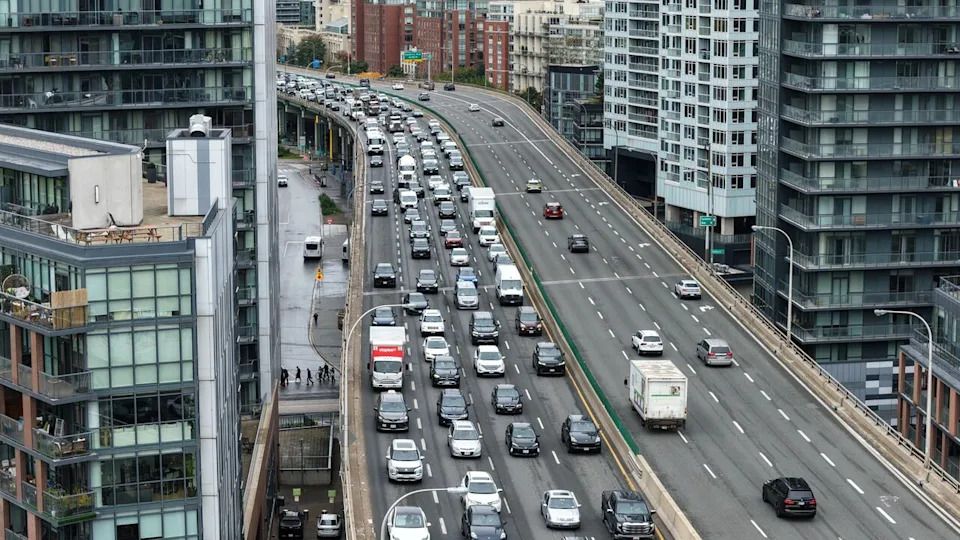
There’s no one solution to fix the city’s gridlock, Toronto’s new chief congestion officer says as he finishes up his first week on the job.
Andrew Posluns sat down with CBC Toronto on Friday to discuss the freshly created role, noting there’s no “magic bullet” that will address the city’s congestion.
“There are a lot of factors that feed into congestion,” he said. “We need to do everything we can in order to be able to mitigate and address the congestion challenges that arise.”
Advertisement
Advertisement
Advertisement
Advertisement
Posluns, who started in the new role Monday, said Toronto is a growing and successful world-class city, which also comes with its downsides.
“There's a lot of construction and development in Toronto … It's a dynamic place where people want to be,” he said. “It's great for Toronto, our economy and our country, but it also means that it can at times put a lot of demand on our roads.”
The new role comes as the city has faced consistent congestion challenges, including bumper-to-bumper traffic, a return to work mandate and the FIFA World Cup 2026.
Gridlock costs GTHA $44.7B per year: study
In a CBC Toronto 2025 three-part series, a December 2024 Canadian Centre for Economic Analysis study found gridlock costs the Greater Toronto and Hamilton Area $44.7 billion a year in economic and social value.
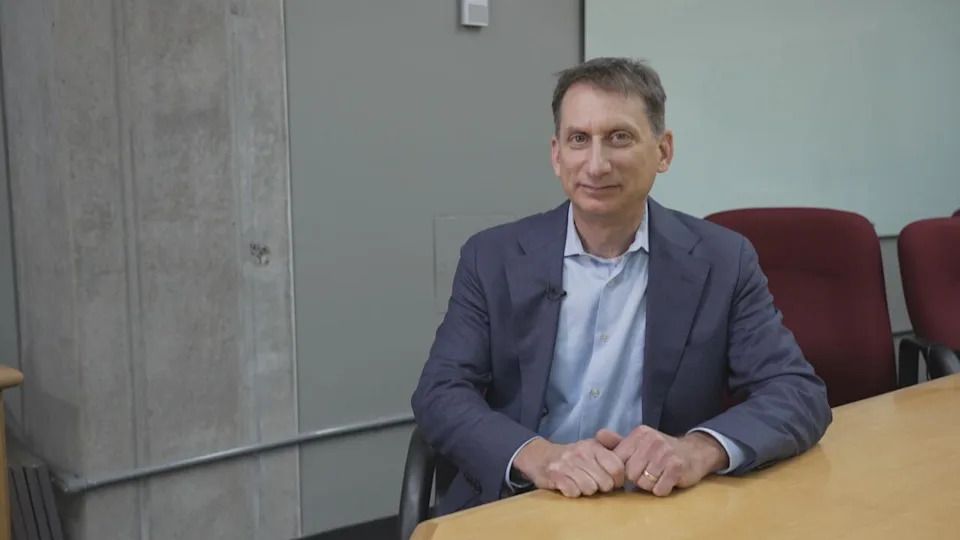
Andrew Posluns, who started in the new chief congestion officer role on Monday, said Toronto is a growing and successful world-class city, which also comes with its downsides. (Patrick Morrell/CBC)
Posluns was light on specifics in Friday’s interview, but said his first priority is looking through the city’s congestion management plan.
Advertisement
Advertisement
Advertisement
Advertisement
High on his list is co-ordinating construction projects and their timelines, “leveraging” relationships with colleagues to find strategies and communicating work to residents to ensure they can move around easily and reliably.
“I'm going to be working with all of those partners to be able to collaborate and co-ordinate,” he said. “I think we all have a shared interest in helping Torontonians move around better.”
Giles Gherson, president and CEO of the Toronto Region Board of Trade, said the organization pushed for the role and hopes Posluns will be given sufficient authority to make an impact.
“We thought there needed to be somebody to co-ordinate, really be a kind of a point person, a quarterback to lead and coordinate the city's battle plan to reduce congestion,” he said Friday.
U of T professor doesn't 'envy' Posluns's role
But Gherson said it’s going to take a couple of years to achieve reduced roadway traffic.
Advertisement
Advertisement
Advertisement
Advertisement
To alleviate congestion in the city, he suggests reworking major arterial roads, increasing the number of lanes on streets and getting the Eglinton Light-Rail Transit up and running.
“That's where most of the crunch happens,” he said. “The rest is, how do you fix the roadways so that they actually support free-flowing traffic?”
Andrew Posluns sat down with CBC Toronto Friday to discuss the freshly created role, noting there’s no 'magic bullet' that will address the city’s congestion. (Tina Mackenzie/CBC)
University of Toronto professor of transportation Steven Farber said the chief congestion officer role places the blame for congestion squarely on mismanagement and co-ordination issues.
“I don't envy [Posluns’] position and I don't envy his mandate because I think that the focus of the congestion management plan for which he's tasked to operationalize is a bit of a flawed project,” he said.
Advertisement
Advertisement
Advertisement
Advertisement
Farber, who also leads U of T’s Mobility Network initiative, said although lengthy construction projects and blocked lanes are part of the issue, fixing that won’t solve Toronto’s gridlock.
“The real problem is we're a very large city that ultimately depends on people traveling long distances with their car without competitive alternatives,” he said.
Farber suggests pushing for transit priority, more cycling lanes and making neighbourhoods walkable.
“So long as that part of the equation doesn't change, we're always going to have congestion in this city.”
تم ادراج الخبر والعهده على المصدر، الرجاء الكتابة الينا لاي توضبح - برجاء اخبارنا بريديا عن خروقات لحقوق النشر للغير


