


اخبار العرب-كندا 24: السبت 3 يناير 2026 05:48 صباحاً
A group of academics at Dalhousie University is working to establish ethical rules for conducting research in African Nova Scotian communities that they hope could be used as a guideline for studies in racialized communities across North America.
The African Nova Scotian Research Ethics Project aims to create a framework for how researchers can go into communities without causing harm while producing work that benefits residents, according to lead investigator Michelle Williams.
“I think one stark and very unfortunate example would be the situation of Africville and the removal of its residents, which was bolstered by academic research around the issues of urban renewal, as it was called at the time,” Williams said in an interview.
Advertisement
Advertisement
Advertisement
Advertisement
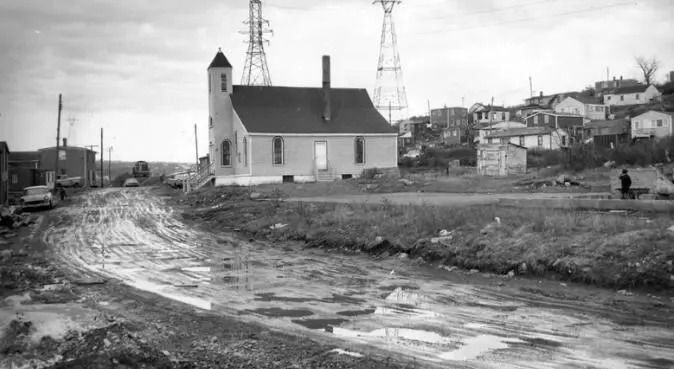
Africville was first settled in the 1800s and was home to about 400 people before the City of Halifax voted in 1964 to demolish the community to make way for industrial development.
“That was devastating in terms of its outcome,” Williams said.
In 1964, the City of Halifax voted to remove the residents of Africville to make way for industrial development. (Halifax Regional Municipality Archives)
The team behind the project is consulting all 52 African Nova Scotian communities across the province to help form the ethical research rules.
The work aims to not only determine the least intrusive ways to conduct research in these communities, but also identify subjects community members would like to see studied, Williams said.
Connection between community and culture
Melissa Marsman, an associate professor at Dalhousie’s Schulich School of Law, is one of the co-leads on the project.
Advertisement
Advertisement
Advertisement
Advertisement
Since Black people arrived in Nova Scotia in the 1700s, Marsman said there’s been a deep connection between where they lived and what they valued.
“These isolated, racially segregated geographic spaces, I think, in large part created an environment that allowed our culture to form and thrive, which then enabled us to survive over centuries,” she said.
Marsman said African Nova Scotian values put a strong emphasis on the collective use and stewardship of a community's land.
Understanding these values in the context of, for example, commercial development is important to not only protecting culture but ensuring African Nova Scotians can thrive.
Advertisement
Advertisement
Advertisement
Advertisement
“I see value in knowledge mobilization that is rooted in our community lived experience and our community wisdom and rooted in our community values that aren't necessarily the same or aligned with traditional and mainstream values,” Marsman said.
The research ethics project falls under Dalhousie’s African Nova Scotian Strategy, which was created in 2021.
The strategy’s purpose is to establish initiatives that support African Nova Scotian students, staff and faculty members.
“We're working in an institution that could feel very corporate sometimes, so this project, I feel, is very grassroots and very community driven,” said Jalana Lewis, Dalhousie's director of African Nova Scotia community engagement.
Advertisement
Advertisement
Advertisement
Advertisement
The project "allows us to sort of go outside across the province to different African Nova Scotian communities and engage folks who we'd like to help them find their way onto campus eventually,” she said.
The research team will spend two years consulting with every African Nova Scotian community in the province before releasing their ethical rules, Williams said.
(CBC)
For more stories about the experiences of Black Canadians — from anti-Black racism to success stories within the Black community — check out Being Black in Canada, a CBC project Black Canadians can be proud of. You can read more stories here.
MORE TOP STORIES
تم ادراج الخبر والعهده على المصدر، الرجاء الكتابة الينا لاي توضبح - برجاء اخبارنا بريديا عن خروقات لحقوق النشر للغير


