



اخبار العرب-كندا 24: الجمعة 2 يناير 2026 10:20 صباحاً
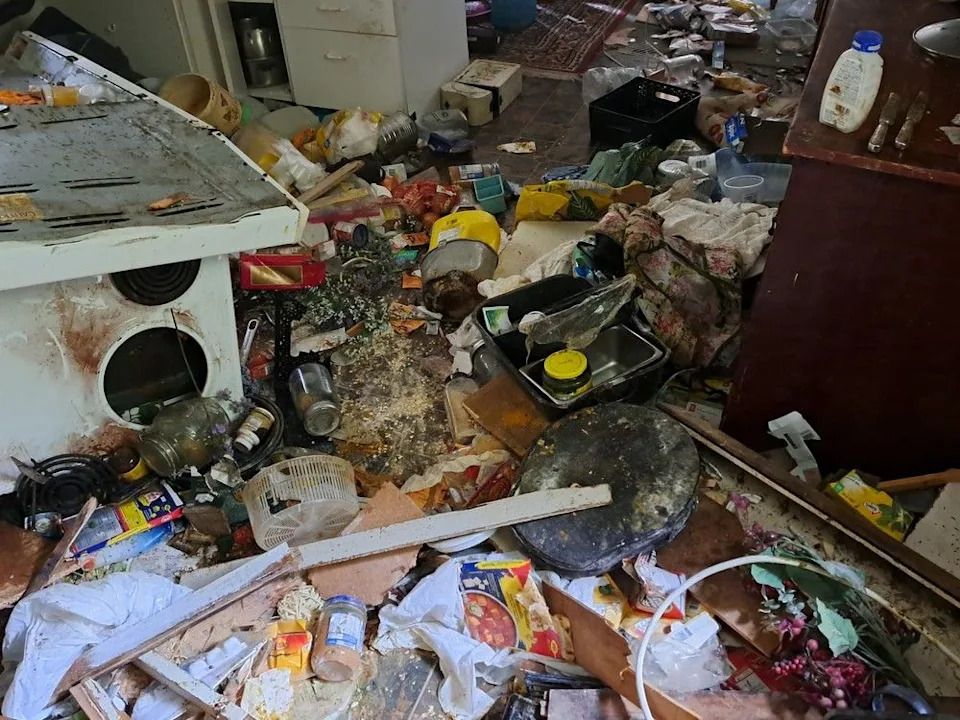
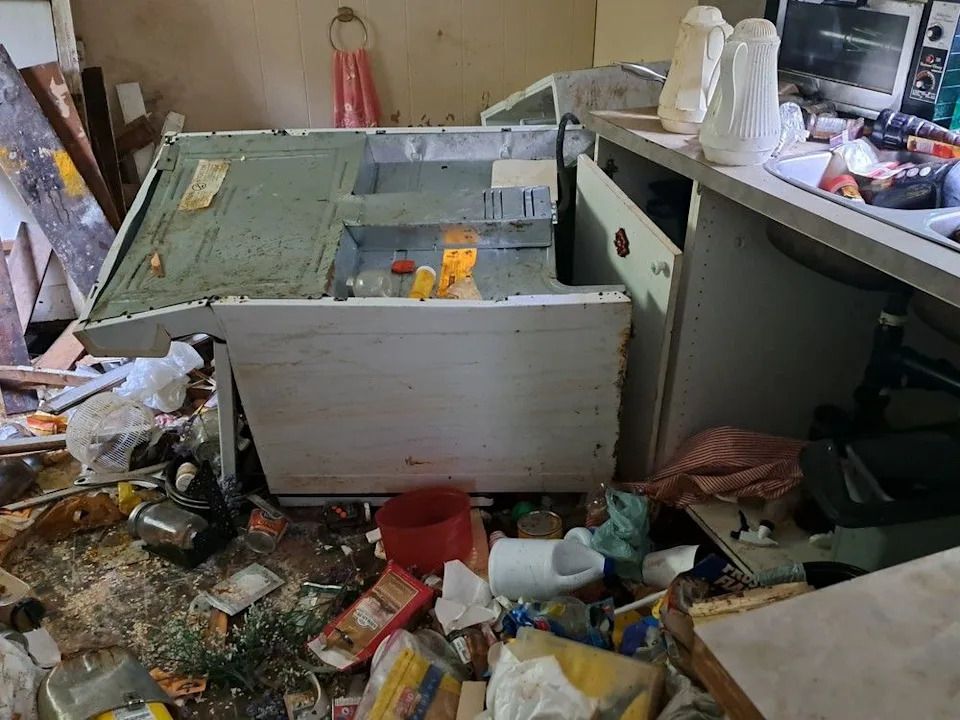
A grizzly bear broke into Tanyss Munro’s home, tearing down walls, ripping out the furnace and destroying her kitchen.
The attack came in October, after a summer of spotting a number of bears on her property in Bella Coola, B.C. Munro said she and her husband warned local conservation officers that if they did not deal with the aggressive animals, someone could die.
One month later, a female grizzly bear with two cubs attacked a group of teachers and 20 children from a nearby school, injuring 11 people, including three students, two of them critically.
Advertisement
Advertisement
Advertisement
Advertisement
“I’m sure, the whole school is just shocked, not to mention all the little children who were not personally attacked, but saw their friends attacked,” Munro said. “I mean, absolutely terrifying. It’ll have changed their lives forever, no question.”
Following the Nov. 20 incident, the local Nuxalk First Nation advised residents to avoid walking and offered ride share services.
There are an estimated 13,000 grizzly bears inhabiting British Columbia. In the 4 Mile subdivision of the Nuxalk First Nation where the attack on schoolchildren occurred, there are reportedly about 22 bears per 1,000 square kilometres, which is considered high.
A grizzly bear destroyed the home of Tanyss Munro, who lives in Bella Coola, B.C.
The B.C. Wildlife Federation said that there have been more bear attacks since trophy hunting was banned in 2017.
Advertisement
Advertisement
Advertisement
Advertisement
In the last year, there have been various reports in Bella Coola of bears breaking into residences, and schoolchildren missing recess and needing RCMP supervision to board buses due to the bear threat.
Munro thinks it’s time for a broader conversation about how to fix the issue.
“There are probably many who would say, ‘No, the bears, the bears were there first, and we need to respect them,’” Munro said. “We wouldn’t be talking about that if they were in a city, if they were in Victoria or Vancouver or Calgary or wherever.”
The Bella Coola resident spoke to National Post about the growing threat from bears in her community. This interview has been edited and condensed for clarity and length.
A grizzly bear destroyed the home of Tanyss Munro, who lives in Bella Coola, B.C.
How much do you know about the recent attack and how has it affected the community?
The attack in November with the schoolchildren and a couple of teachers was pretty appalling. We’re all just horrified that that happened, and especially to children. But there’s also a teacher who is really injured, and we’re pretty devastated, you could say, because that is so unusual. In particular, a bear attacked a group of 20 human beings together. And these were not grade one and twos, they were grade four or five. So they’re not tiny, it was pretty shocking for everybody. It was pretty horrible.
How prevalent are grizzly bear attacks in the area?
We’ve had our property for about 18 years, and we’ve always had bears around, and normally black bears and grizzlies. We use good bear sense. We don’t go for walks without bear spray. The last thing you want to do is surprise a bear. We also, in our house, have been extremely cautious regarding bear attractants, so we don’t even have a compost outside.
Advertisement
Advertisement
Advertisement
Advertisement
About four years ago, maybe, there was a bear who broke into our car, even though there was nothing in it, and ripped the door off. The car was a complete write-off, and that bear was also doing the same elsewhere, going up onto people’s porches and so on.
In October (2025), it was just unbelievable, where the bear, a sow and two almost full-grown cubs came in. Both of our homes, which are both on the same property, just devastated.
This past summer, we had, first of all, a black bear on our property in May and June. And then by July, and for sure, August and September, what we had on our property was a sow with a cub. So we just steered really clear of them, right? Usually I go out for a run, and I just didn’t do running outside at that point, because you have to really respect a sow with her cub.
A grizzly bear destroyed the home of Tanyss Munro, who lives in Bella Coola, B.C.
Do existing community safety protocols fall short and who do you think should be held accountable for the attack on the schoolchildren?
The bears are accountable. What we have is a big problem. What we need to do is we really need to have broader community consultation with the federal, or with the provincial, enforcement people.
A large grizzly bear on the side of the road in the Rocky Mountains of Alberta.
A lot of people talk about bear attractiveness. Well, not in our place, unless you call a refrigerator inside a locked house and canned food on the shelves a problem. We never have had any attractants outside. So attractants can be a problem. They were not a problem where they devastated our place. It’s pretty scary having that happen, because now they will, for sure, come back looking for their food cache again in the spring. I think maybe they’re becoming habituated to people, and that’s a problem. I’m not sure what to do about that.
Advertisement
Advertisement
Advertisement
Advertisement
For us, when the three bears came into our house and did all that damage, the conservation officers came out, not super quickly, because there were many attacks, ours was just the worst, but many attacks by that group of bears. They eventually came out and set a trap. One bear was caught in the trap. There was an opportunity at that time to shoot a bear that was about 10 to 15 feet away from the conservation officers, who were heavily armed and ready to do such a thing. They heard the bears snorting and crashing, and so another one or more bears in the forest. They didn’t take action to dispose of those bears.
I’m definitely not saying that we need to kill all bears. The conservation officers themselves talk about a line, and the line that was crossed for us is when they go into somebody’s locked, closed-door house. That’s a line. Bears aren’t stupid animals. Relying on traps is a little like putting a sandwich into a jail cell and hoping Billy the Kid goes in to get it, but it’s not happening. Bears aren’t stupid, so that’s that’s a problem. The conservation officer’s lack of quick action is a big challenge for everybody.
What protective measures should be put in place to keep the community safe?
I would never say that everybody has to have a gun, like this is just not going to be anything that I ever would think would be necessarily a solution. What I will say is that, just like us, when we go for a walk, the teachers, when they went out for their field trip, had several cans of bear spray. That’s the strongest thing that we know, to haze the bears to get them away. According to the chief, the teacher went through two cans of bear spray about a foot-and-a-half away from the bear’s face, and it did nothing. So what needs to be done?
According to research that I’ve seen, and I am in no way an expert, relocation of bears is not very effective, because the bears will have a strong instinct to be where they grew up and where they’re used to being, and so they very likely will come back, even if they’re quite far away. We have to do a better job of managing the bear population. We really do have a problem because when it’s a matter between a bear life and a human life, we can love bears, not a problem, and respect our wildlife and all of that. But human life always takes precedence, in my opinion. So we do need to do something and I’m not sure what the answer is.
What is the general consensus in Bella Coola after the bear attack?
All I can tell you is what I hear from my friends and someone in the valley, which is that there are some people who think, no, that the problem is a human problem. It is not a bear problem. And then there’s other people who like, in my case, that’s just not the case. Our house has been there for a long time, and we didn’t have any bear attractants, so I don’t think that’s a human problem. There’s other people who say, no, there’s got to be something we can do. And there’s some people who would say that the bear population is too high. Maybe it is, maybe it isn’t. But one thing I don’t see is an open dialogue about these statistics. What statistics do they have? Why not start to share this and just have a more transparent discussion about all of this in the province? I think that would really be appreciated by people, that we can start to look at building policies based on what stats there are. Look, we might find that the bear population has declined, okay, and that the problem is something else. But like, let’s get to the bottom of it. Otherwise, what you get is strongly held opinions, views, judgments, and you don’t ever get anywhere. People just get into one camp or another, and the human-bear conflict problem remains, and maybe even increases.
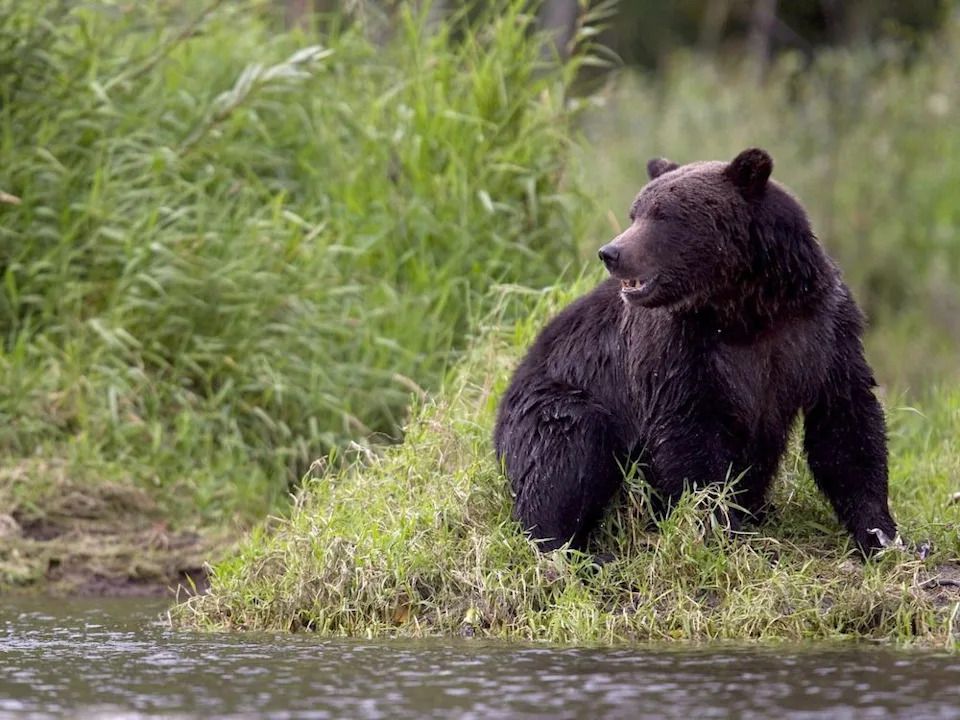
A grizzly bear is seen fishing along a river in Tweedsmuir Provincial Park near Bella Coola.
What lessons should the province and Bella Coola take from this attack?
It’s like the human nightmare, right? It might as well be a dinosaur or whatever it is. A bear attack on children is just pretty horrific. And I think the lesson, there’s two lessons for me. One, is that the conservation officers must be allowed, in our case, not in the case of the children — but look, we’re talking about the same season and the same valley — they can’t not be able to react quickly, and according to their training and responsibly. They cannot be in a situation where they delay response to a bear, because that now puts humans at even higher risk than they were before the bears, in our case, came into the house to begin with, because now they’ve learned their lesson and they will come back. So that was not exactly what happened with the schoolchildren, absolutely. But we are talking about the same valley and the same bears.
Advertisement
Advertisement
Advertisement
Advertisement
The other lesson learned, although I don’t know that anybody is learning, but this is what I would like, is that we start to have more open dialog and start to have more statistics shared. I don’t know what the stats are, or is our bear population increasing? Is it not? What are the bottlenecks? What are the drivers of bear attacks?
We need stats, and if they don’t have stats, no problem. Let’s start to get them. Let’s start to tag and color more bears, maybe, so that we can start to look at the bears. Most grizzly bears are not problematic, will not attack people. When grizzly bears have lost their fear of people, that’s a very dangerous situation.
Obviously, it’s what made grizzly bears and humans be able to live together, with each of them respecting the other’s boundary. But when the grizzlies lose their fear of humans and are not being dealt with after an attack immediately, because conservation officers feel like they’re being watched like a hawk, in their words, this is a problem. It is almost certainly going to result in a death at some point. I would think, a loss of a human life. I get that people all have strongly held opinions and views on one side of the line or the other, but let’s start the conversation.
Our website is the place for the latest breaking news, exclusive scoops, longreads and provocative commentary. Please bookmark nationalpost.com and sign up for our daily newsletter, Posted, here.
تم ادراج الخبر والعهده على المصدر، الرجاء الكتابة الينا لاي توضبح - برجاء اخبارنا بريديا عن خروقات لحقوق النشر للغير


