


اخبار العرب-كندا 24: الجمعة 2 يناير 2026 08:29 صباحاً
Montreal has a housing shortage.
Montreal has a growing number of vacant apartments.
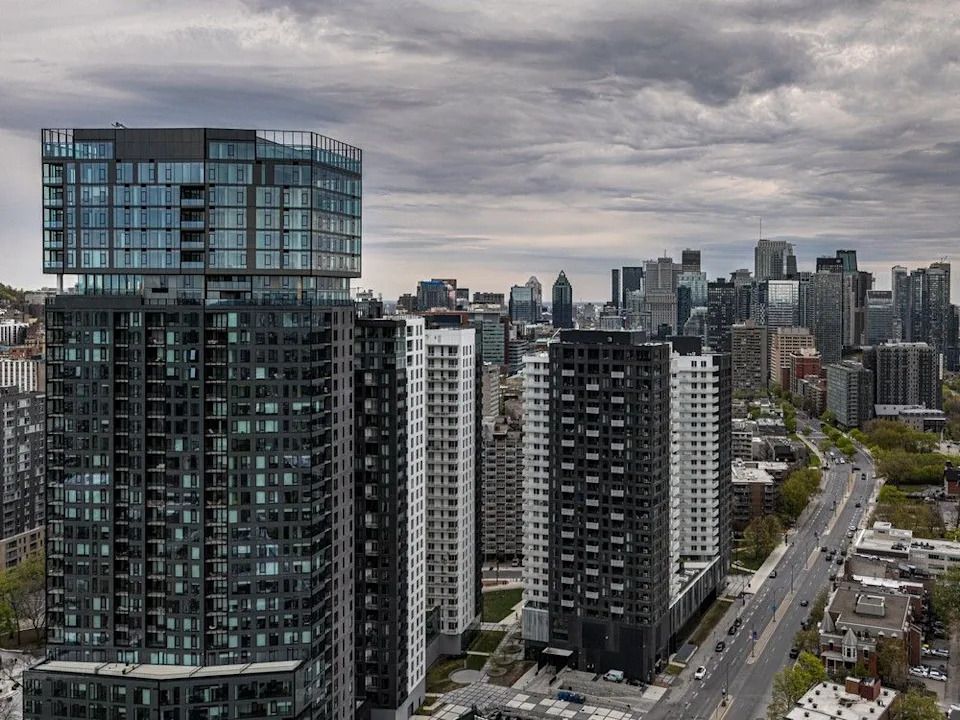
Both statements, though contradictory, are true. They reflect a fragmentation of the rental market that is fuelled in part by a recent spate of construction of high-end apartment towers. And the growing divide between luxury and lower-rent offerings is prompting some observers to urge politicians and the media to stop using an age-old variable — the average rental vacancy rate — as a gauge of housing availability and affordability in the city.
Advertisement
Advertisement
Advertisement
Advertisement
“You have to take the vacancy rate with a certain grain of salt,” said Émile Boucher, a community organizer with the Regroupement des comités logement et associations de locataires du Québec (RCLALQ).
“When we think of the vacancy rate as one, we’re not differentiating which units are vacant. You have to minimally look at the two vacancy rates — for affordable apartments and for more expensive apartments.”
The 2025 annual rental market survey released by Canada Mortgage and Housing Corp. (CMHC) on Dec. 11 showed the average vacancy rate for the greater Montreal region in 2025 was 2.9 per cent. On Montreal Island alone, it was 3.1 per cent.
On the surface, that would indicate the rental housing market in Montreal and the suburbs is drifting toward or over the “magic” vacancy threshold of three per cent — the point where the market is considered to be balanced and above-inflation rent increases can start to abate.
Advertisement
Advertisement
Advertisement
Advertisement
However, an average is deceptive in a polarized market. In fact, a deeper dive into the CMHC data shows there was a 5.9 per cent vacancy rate for luxury apartments in the Montreal region in 2025, and only a 1.5 per cent vacancy rate for the larger pool of “affordable” apartments.
So lower-priced units remained relatively scarce in 2025, even if the vacancy rate for such units had slightly increased. But on the flip side, there was an abundance of empty luxury units this year, to which more units will be added as new constructions are completed. Lingering vacancies in luxury buildings have led some landlords to offer one to three free months of rent to try to entice prospective tenants, Boucher noted. Even with the one-time discount, the rents remain out of reach for many people, he added.
Moreover, rents for both affordable and luxury apartments in the Montreal region rose well above the inflation rate again in 2025, the CMHC data shows.
So fixating on an average vacancy rate of 2.9 per cent only masks the affordable housing crisis, Boucher contends.
Advertisement
Advertisement
Advertisement
Advertisement
The crisis has two dimensions: a dearth of low-rent apartments for the high demand and financial hardship for those who have found a roof, but are spending too much on rent to hold onto it.
“The vacancy rate is a very limited variable in terms of information,” Boucher said. It’s also important to factor in the proportion of income that people are spending on rent.
Tenants who spend more than 30 per cent and even 50 per cent of their revenue on rent are sacrificing other needs, such as groceries, he said. Tenants living in lower-rent private apartments are also at greater risk of being evicted than people in high-rent units, Boucher said.
“So thinking that if we reach a three per cent or 3.5 per cent average vacancy rate we’ll have some miraculous solution and the housing crisis is over, it completely ignores the reality for most tenants — those who are paying too high a proportion of their revenue on rent.”
Advertisement
Advertisement
Advertisement
Advertisement
Relying on a single vacancy rate as an indicator also masks the disparity between neighbourhoods. For example, the vacancy rate for two-bedroom apartments in downtown Montreal and Nuns’ Island, where rents tend to be high, was 8.3 per cent this year, while Montreal North, one of the poorest neighbourhoods on the island, had a vacancy rate of 0.9 per cent for two-bedroom apartments, according to the CMHC data.
The average vacancy rate is still pertinent, but it’s no longer useful alone, says the head of an association representing 17,000 Quebec landlords.
“It provides a global picture,” said Martin Messier, president of the Association des Propriétaires du Québec, adding that landlords rely on the CMHC annual survey and its various indicators to measure themselves.
“But yes, you have to go further today. You have differences in the market that you didn’t see in the 1990s. You have to go further in the analysis and not just say the global vacancy rate is 2.9 per cent.”
CMHC data shows there was a 5.9 per cent vacancy rate for luxury apartments in the Montreal region in 2025, and only a 1.5 per cent vacancy rate for the larger pool of “affordable” apartments.
Having dual realities in the rental market is relatively new, stemming from a growing stock of highrise luxury apartment buildings that are spurred by federal subsidies and tax incentives and by a dampening condominium market.
Advertisement
Advertisement
Advertisement
Advertisement
“In the 1990s, you had some very chic buildings, like Rockhill, the Regency, the Olympic Village towers,” Messier said. But these were relatively exceptional. “These were landmarks in Montreal where you had more luxurious units and more services,” he said.
“But now, you find buildings … with units that rent for $2,000, $3,000, $4,000, $5,000 in all the neighbourhoods. There’s definitely a difference in what’s offered on the market.”
At one time, the average vacancy rate offered an accurate portrait of housing availability but also the impact on rents.
“What we’ve seen in the past in the Montreal region and Quebec, when the vacancy rate was seven or eight per cent (in the 1990s), you would have almost no rent increase,” said Francis Cortellino, a CMHC economist who is responsible for Quebec.
Advertisement
Advertisement
Advertisement
Advertisement
“And when the vacancy rates are below two per cent or one per cent, you will have rent increases above inflation. When you’re around 3.5 per cent, four per cent, more or less, normally we’ll have rent increases at the inflation rate.”
He cautioned that “there’s no magic number” dictating when rents will become more affordable.
“You need to get that more balanced market so rent increases get slower, like around inflation,” Cortellino said.
In general, that’s considered to be around three or four per cent vacancy. But even then, it won’t be an immediate end to the affordability crisis, he said.
“It can be balanced, but a lot of people have difficulty paying the rent because rents have increased so much in the last few years,” Cortellino said.
Advertisement
Advertisement
Advertisement
Advertisement
“If rent increases can be slower in the next few years, you hope that household income starts to catch up a little bit. And then the market becomes less unaffordable.”
lgyulai@postmedia.com
Related
تم ادراج الخبر والعهده على المصدر، الرجاء الكتابة الينا لاي توضبح - برجاء اخبارنا بريديا عن خروقات لحقوق النشر للغير


