


اخبار العرب-كندا 24: الثلاثاء 23 ديسمبر 2025 06:56 صباحاً
A decision by Regina city council to implement a record property tax increase has left organizations inside and outside city hall providing mixed reviews.
Last week, city council passed a 2026 budget with a 10.9 per cent mill rate increase.
For the average household, that works out to an extra $23 per month in property tax.
Mike Tate, CEO and president of the Regina and District Chamber of Commerce, said his organization had looked at other cities across the country.
Advertisement
Advertisement
Advertisement
Advertisement
Tate said the chamber found cities had implemented tax increases ranging from zero per cent to 6.7 per cent in their 2026 budgets.
"From a business perspective, we thought that was palatable. We realize that with any growing city, there's going to be increased cost. But to go to a 10.9 per cent increase, we felt [it's] too high," Tate said in an interview.
Increase could have been higher
The increase could have been much higher. In the weeks leading up the budget vote, city administration highlighted that a 15.69 per cent increase was needed just to maintain the city's current service levels.
Advertisement
Advertisement
Advertisement
Advertisement
If passed, that would have been a $33 increase per month in property taxes for the average homeowner.
City of Regina officials had said the historically large proposed mill rate increase was the result of decisions made by previous city councils to keep the mill rate artificially low — including through the use of reserves to offset increases.
“Politically, no one wants to stand up and say we're raising your taxes two or threefold,” said acting city manager Jim Nicol in November.
Those reserves are now exhausted and the City of Regina's elevated mill rate was an attempt to catch up on the deficit and backlog in infrastructure, officials said.
Advertisement
Advertisement
Advertisement
Advertisement
Ian Cantello, president of the Regina Civic Middle Management Association, had advocated for council to adopt a mill rate increase of 18.93 per cent.
Cantello said his union of nearly 400 mostly white collar workers at the City of Regina took the rare step of making a presentation to council during the budget debate because they've heard from residents that even just the status quo is not good enough.
"Our members believe that we have the ability to really improve Regina, the city, but we need the resources to be able to do that," Cantello said.
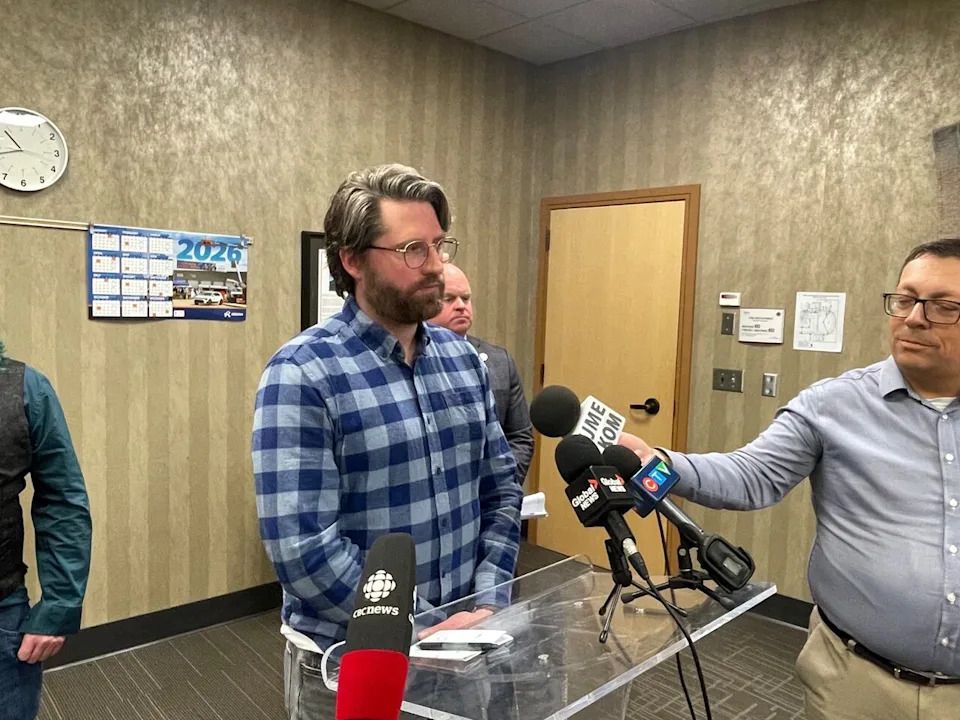
Ian Cantello, president of the Regina Civic Middle Management Association, speaks with reporters earlier this month. (Chris Edwards/CBC)
Cantello said the 10.9 per cent increase passed by council "could have been much worse" but that residents should be prepared to see services worsen or for the city to do less things in general.
Advertisement
Advertisement
Advertisement
Advertisement
Cantello said he believes the budget passed by council only kicked the hard decisions about addressing long-term backlogs down the road.
"My ultimate takeaway from that is that we've just added another four and a half per cent into that backlog," Cantello said.
Large increases a pattern across Canada, prof says
Matti Siemiatycki, director of the infrastructure institute at the University of Toronto, said there has been a pattern in previous years of municipalities across Canada choosing to hold the property tax at zero per cent or below the rate of inflation.
"When that happens for an extended period of time, there's a backlog. Things start to break down; costs escalate; and then you have these bursts where there's larger tax increases in order to try to make up for it," said Siemiatycki.
Advertisement
Advertisement
Advertisement
Advertisement
Siemiatycki said cities have responsibility for much of the infrastructure in Canada but collect a very limited amount of tax revenue through property taxes.
That means municipalities across the country are almost always in a budgeting crunch, Siemiatycki said.
With affordability a key issue for many people, Siemiatycki said it's not surprising people get frustrated by large tax increases.
"I think what makes it feasible and palatable is if people can also see that the services are maintained and improved," said Siemiatycki.
"The key is that people want to see that their money is being spent on things that are both noticeable and meaningful in their lives."
تم ادراج الخبر والعهده على المصدر، الرجاء الكتابة الينا لاي توضبح - برجاء اخبارنا بريديا عن خروقات لحقوق النشر للغير


