


اخبار العرب-كندا 24: الثلاثاء 16 ديسمبر 2025 01:10 مساءً
There is no joy in Hogtown. Public transit has struck out. Again. After many years of construction and $3.7 billion spent, there is a new light-rail line on Finch Avenue West, in the city’s north end. It is 10.3 kilometres long, and almost entirely at grade. (For $360 million per kilometre, many places in the world can build fully underground heavy-rail subways. But the mystery of the North American infrastructure surcharge is a subject for another day.)
The Finch West LRT stops once every 572 metres, on average, which is too many times. And it is achingly, mind-numbingly slow. When I rode it recently, the final damage was 50 minutes to travel 10.3 kilometres, for a blistering average speed of 12 kilometres per hour.
Twelve. Pathetic. But there was comic relief, at least: The Number 36 bus, which the LRT is meant to replace, is still running for now. And you can watch the Number 36 buses whizzing by you from your seat on the LRT. So, $3.7 billion to underperform the bus. Dismal.
Advertisement
Advertisement
Advertisement
Advertisement
All in all, thanks to the University Line subway crawling its way north to Finch from Bloor Street — the subway doesn’t go very fast anymore either — the trip from Yonge and Bloor near Postmedia’s Toronto headquarters to the LRT’s western terminus at Humber College had taken an unfeasible one hour and 43 minutes. To travel 25 kilometres.
“Unfinished, unusable,” one reviewer memorably decreed of Blackberry’s disastrous Playbook tablet. That’s what Toronto has, basically: the Blackberry Playbook of LRTs. And there’s another one eventually set to open on Eglinton Avenue: far longer, far more expensive, far more over-budget and past schedule. That LRT is largely underground, where — unlike on Finch — the trains won’t have to compete with vehicular traffic. But where it’s at grade, it will; and with the TTC, slower is always possible.
The good news, such as it is: Mayor Olivia Chow, who seems to be entering re-election mode, quickly admitted she had been on the LRT and had very similar thoughts to everyone else. Too slow. Must go faster. (The province built the Finch and Eglinton LRTs. The TTC will operate them.)
So at the next city council meeting, councillors will debate (among other things) giving the Finch West LRT vehicles “signal priority” — i.e., they won’t have to wait for cars to cross or turn left in front of them, or at least they won’t have to wait as long.
Advertisement
Advertisement
Advertisement
Advertisement
This is how LRT technology works everywhere else in the world, basically: If a train has to interact with vehicular traffic, it needs to matter more than cars, otherwise buses like the Number 36 are the more compelling option. Buses can go around things. True enough, they hold fewer people than an LRT, so you need more buses and operators; and I think most people would just prefer to be on rails than on wheels, all else being equal.
But all else isn’t equal.
For $3.7 billion, municipal, provincial and federal taxpayers have been given something that’s slower than the bus, and every bit as maddening in its own ways. Indeed, unable to stomach the thought of riding the LRT all the way back to the Yonge subway, on the return trip I bailed at Kipling Avenue (actually “Mount Olive Station” since none of the LRT’s stops are actually named after their major cross streets; that would be too easy) and alighted a Number 45 Kipling bus, which headed southward toward the Bloor subway at what seemed like downright unseemly speed.
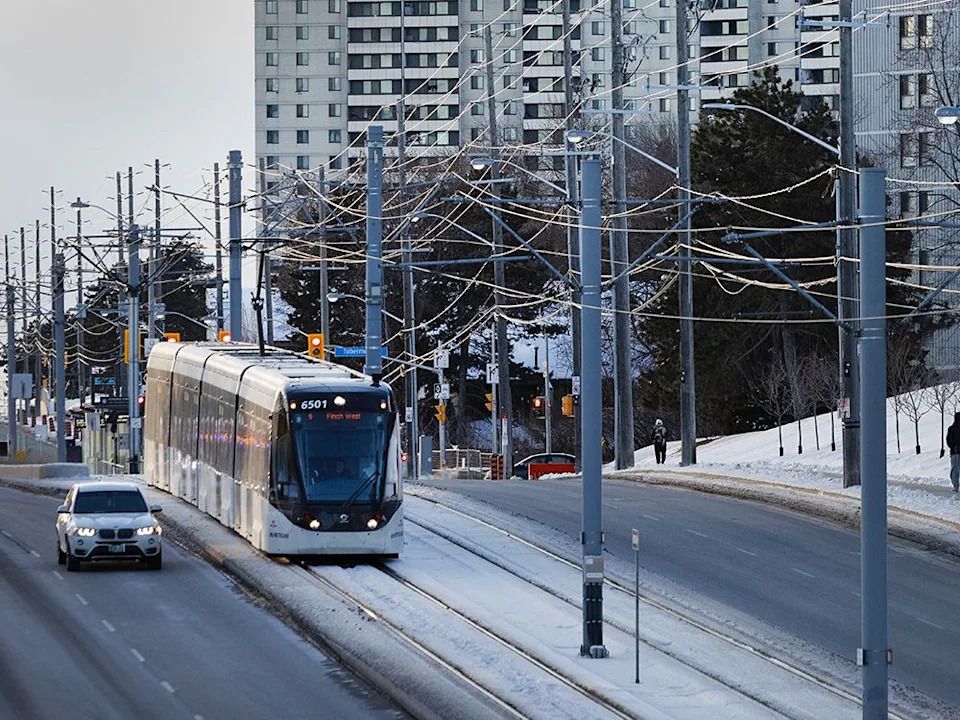
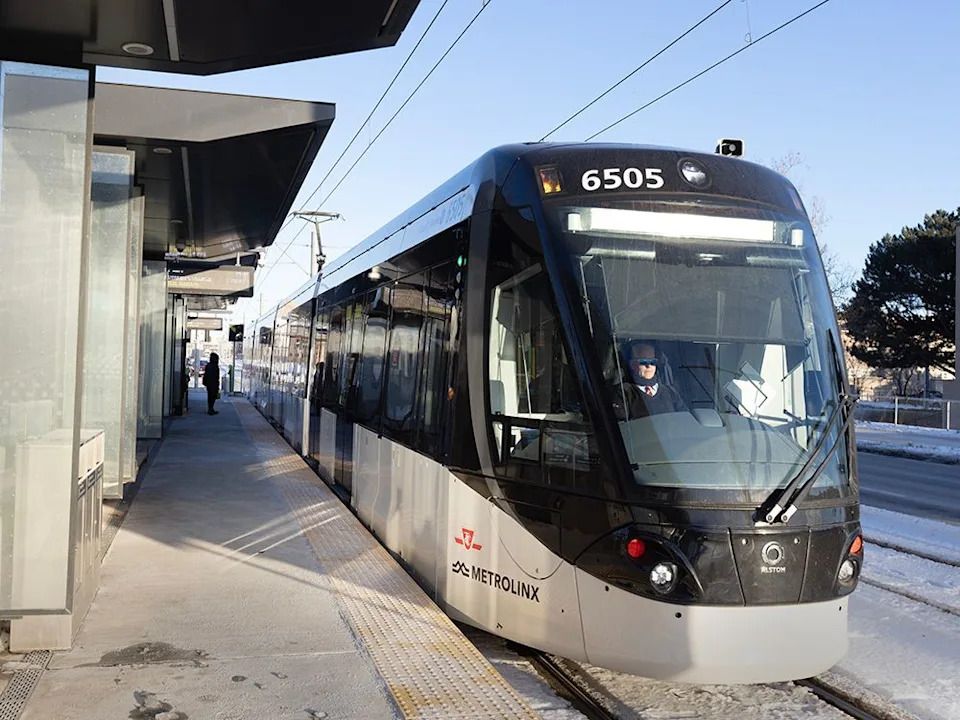
The LRT vehicle that columnist Chris Selley rode on along the new Finch Avenue West route in Toronto managed an average speed of just 12 kilometres per hour.
As absurd as it is that Toronto would build infrastructure like this without signal priority baked in, it also means we don’t really know how much time it would save. Even with signal priority I suspect it wouldn’t be enough to make this anything but a wash versus the bus — a wash, that is, except for $3.6 billion pissed down a rope. And that’s assuming Ontario Premier Doug Ford, patron saint of every person driving alone in a car, doesn’t intervene to stop it from happening,
Advertisement
Advertisement
Advertisement
Advertisement
One of the most infuriating aspects of the COVID-19 pandemic was hearing people defend governments almost explicitly on grounds that if we don’t defend governments, bad actors and bad outcomes might be emboldened, and anarchy might then overtake us. The Finch West LRT is a reason why people don’t trust Canadian governments. This is why we can’t have nice things — but then, an LRT isn’t even all that nice a thing. It’s bust basic, functional public transit. And we can’t have that either.
National Post
cselley@postmedia.com
A Light Rail Transit vehicle on the new Finch Avenue West LRT route in Toronto.
تم ادراج الخبر والعهده على المصدر، الرجاء الكتابة الينا لاي توضبح - برجاء اخبارنا بريديا عن خروقات لحقوق النشر للغير


