

اخبار العرب-كندا 24: الاثنين 8 ديسمبر 2025 07:21 صباحاً
Cellphone in hand, they move from shop to shop along busy commercial streets, stopping briefly before heading to the next store. But they’re not Christmas shoppers. In fact, merchants eye them warily, fearing paperwork, unwanted headlines — even fines.
They’re Quebec language inspectors.
For decades, the province has dispatched them to monitor language compliance. Their work sometimes stirs controversy: the Pastagate scandal over Italian menu words, the singling out of the Burgundy Lion pub’s name, and efforts to restrict the word “Go” on bus signs cheering the Montreal Canadiens.
Advertisement
Advertisement
Advertisement
Advertisement
Yet most people have never witnessed a French inspection first-hand.
Long hidden from public view, the inner workings of Office québécois de la langue française inspections are revealed in internal documents obtained by The Gazette.
The picture that emerges comes as the language watchdog, armed with increased funding, steps up efforts to identify businesses violating the law by their use of English.
This close look at inspection operations draws on documents obtained through an access-to-information request and on an OQLF spokesperson’s responses to Gazette questions.
Three areas targeted
The documents pertain to what the OQLF describes as a “major operation” targeting 966 stores.
Advertisement
Advertisement
Advertisement
Advertisement
Three commercial areas were targeted between January and May 2025:
-
Downtown Montreal: Quartier Latin district around St-Denis St.
-
Laval: des Laurentides Blvd.
-
South Shore: Taschereau Blvd.
The OQLF mandate covers all kinds of businesses, but the areas in question are dominated by retail shops and restaurants.
Compliance checks
The mission was fourfold. Inspectors examined signage, receipts, payment terminals and language of service to ensure they complied with the Charter of the French Language, commonly known as Bill 101.
French must be the predominant language on signs. Receipts and payment terminals must be available in French (though English is also allowed), and customer service must be available in French.
Advertisement
Advertisement
Advertisement
Advertisement
The inspectors also informed businesses about rules that took effect in June.
Under those new signage regulations, non-French company names or trademarks must be accompanied by French text twice the size, effectively forcing companies to add French descriptors or shrink English words to comply.
Beyond checking compliance and informing businesses about the new rules, the inspection operation was also about letting merchants know that the OQLF is watching.
“By simultaneously checking compliance with signage, language of service, invoices and payment tools in businesses, this surveillance operation will increase the OQLF’s visibility on the ground,” one of the documents says.
How inspections work
Inspectors criss-crossed the commercial streets, armed with language regulations and ready answers for store owners alarmed by their questions, the photographs they took and the potential penalties in the offing.
Advertisement
Advertisement
Advertisement
Advertisement
They examined store signs, requested receipts, reviewed payment terminals and checked whether service was offered in French.
The inspectors walked into stores and asked to speak to a manager, identifying themselves as OQLF employees.
They travelled light. They did not carry cameras to photograph signage, tape measures to check sign dimensions or dictionaries to judge French usage. Their only tool: a cellphone.
The overt nature of the operation differs from some other efforts, conducted by external companies hired by the OQLF. In those cases, companies send undercover shoppers to check whether store staff greet customers in French, use the bilingual “Bonjour-Hi” or fail to provide service in French.
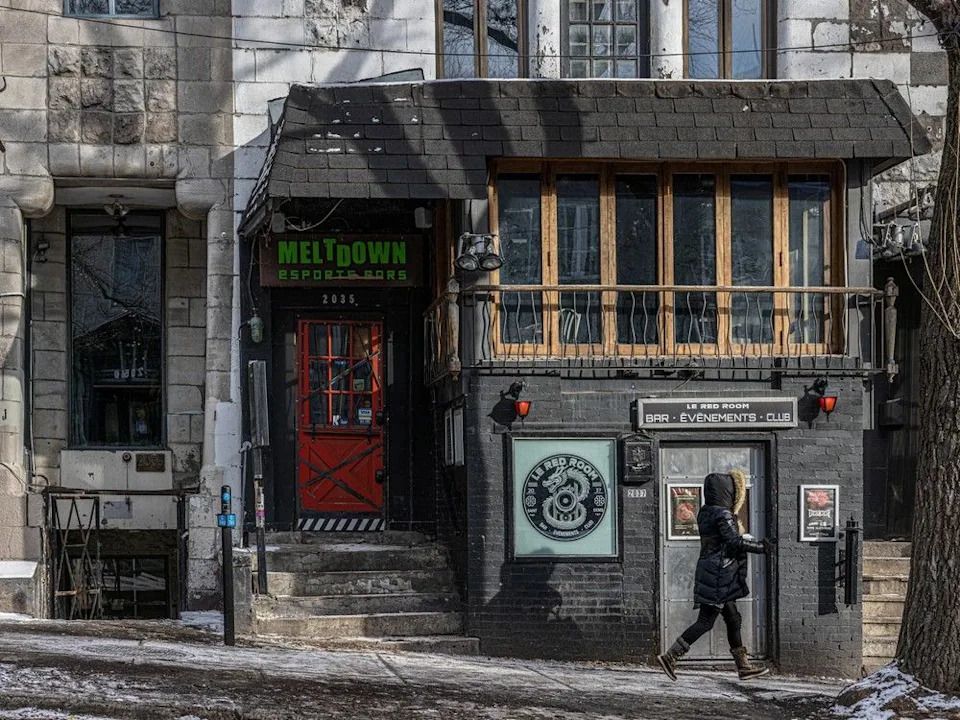
During a recent operation, Quebec language inspectors examined signage, receipts, payment terminals and language of service to ensure they complied with language laws.
Inspection FAQ
The inspectors were given answers to frequently asked questions. The questions themselves point to the apprehension merchants might feel during such visits.
Advertisement
Advertisement
Advertisement
Advertisement
The internal FAQ included guidance such as:
Can an inspector take photos of my business and receipts? Yes, under the Charter, an inspector may “take photographs of the place and of the property,” and require access to computers or other devices to examine, copy or print relevant data.
Will I be fined? The OQLF generally resolves issues collaboratively without fines, but it can issue an order and refer the file to prosecutors.
Did someone file a complaint about my business? No, this inspection is part of a broader compliance review. The OQLF can act independently as part of monitoring operations.
When will I know the results of the inspection? If a business is found to be non-compliant, the OQLF will make contact to explain the findings, set a timeline for corrections, and provide guidance through the process.
Price tag and results
The OQLF declined to provide an estimate of the operation’s cost, saying it was carried out by staff as part of their regular duties.
Advertisement
Advertisement
Advertisement
Advertisement
Though the inspections are over, it will take several more months for the final results.
“Observations from the inspections (still) need to be analyzed thoroughly, and additional checks and validations must be carried out,” the watchdog told The Gazette.
Who are the inspectors?
Job postings and internal documents provide a peek into who the OQLF sends into the field and the qualifications they are expected to have.
Inspectors require a CEGEP diploma, a valid driver’s licence, communication skills, “a strong sense of public service,” and the ability to exercise good judgment and solve problems when dealing with a “diverse clientele,” according to a 2024 OQLF help-wanted ad.
Advertisement
Advertisement
Advertisement
Advertisement
At the time, the salary range was $41,055 to $57,638.
One of the documents obtained by The Gazette contains the names of four OQLF inspectors, with information about two of them publicly available.
One has a background in production management and co-ordination for publishing companies, while the other’s previous work history focused on food quality and safety, product development and regulatory compliance.
Inspectors generally remain anonymous, but some interactions occasionally come to light.
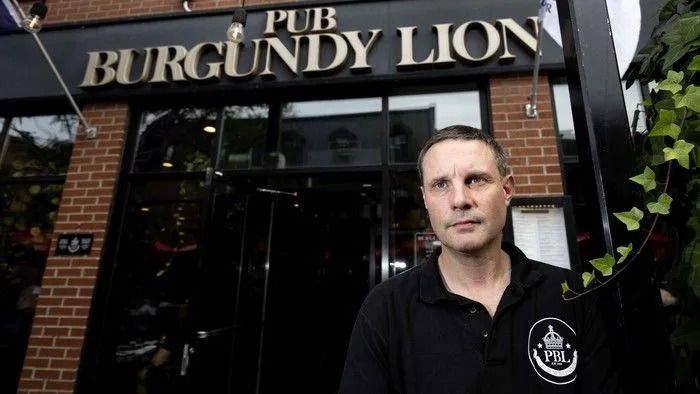
This summer, Toby Lyle, co-owner of the Burgundy Lion pub, said a meeting quickly “soured” when an OQLF inspector asked how to pronounce his last name. “When I told him it was Lyle, he said, ‘That’s not a Québécois name,’” Lyle recalled.
This summer, Toby Lyle, co-owner of the Burgundy Lion pub, said a meeting with an OQLF inspector quickly “soured.”
Language checks widen
It’s not the first time the OQLF has conducted a major inspection sweep.
Advertisement
Advertisement
Advertisement
Advertisement
But previous ones targeted commercial signage and language of service, unlike this broader campaign that also zoomed in on receipts and payment terminals.
The wider focus reflects a more aggressive approach.
The latest operation was co-ordinated by an OQLF department created in 2020: the module des opérations de surveillance.
The surveillance operations unit is “tasked with identifying sectors or geographic areas experiencing francization issues, conducting assessments, and developing and implementing intervention plans to ensure compliance,” according to an OQLF document.
In 2020, Simon Jolin‑Barrette, then the minister responsible for the French language, announced the OQLF would hire 50 new employees as part of an effort to “ensure the health and longevity of a language that forms the very foundation of our nation.”
Advertisement
Advertisement
Advertisement
Advertisement
That included doubling the number of inspectors to eight and adding four advisers to help plan and oversee surveillance operations.
Inspections surge
OQLF inspections have risen sharply in recent years.
In 2024-25, the agency conducted 9,813, some carried out in response to complaints, others during surveillance operations initiated by the OQLF. That compares to 3,601 six years ago.
The rise follows a dramatic increase in language complaints from the public.
In 2024-25, 10,371 complaints were filed, more than triple the 2,807 submitted six years ago.
Since coming to power in 2018, the Legault government has toughened the Charter and encouraged Quebecers to file complaints. They can be submitted quickly using an online form.
Advertisement
Advertisement
Advertisement
Advertisement
Last year, a Gazette analysis found that complaints about alleged language law violations rocketed after the Coalition Avenir Québec government began allowing anonymous grievances.
The ramp-up in inspections coincides with a significant expansion of the OQLF’s resources.
Since the CAQ took office, the OQLF’s budget has more than doubled to $49 million, and staffing has risen over 80 per cent to 398 full-time equivalents.
Language police?
Quebec officials have long bristled at the “language police” label sometimes used by anglophones to describe OQLF inspectors.
The debate even reached the U.S. news program 60 Minutes in 1998, when correspondent Morley Safer produced , including an interview with Louise Beaudoin, at the time culture and communications minister.
Advertisement
Advertisement
Advertisement
Advertisement
“It’s not a police — you know perfectly well,” Beaudoin told Safer. “It’s civil servants — a bunch of civil servants.”
The Gazette asked the OQLF whether its increasing number of proactive inspections signals a shift from a primarily administrative role responding to complaints toward one focused more on linguistic policing or surveillance.
“In line with its strategic plan, the OQLF has increased its presence in the field by conducting more inspections to ensure respect for the linguistic rights of Quebec residents and to support businesses in achieving compliance,” said Nicolas Trudel, the OQLF’s director of communications.
“With this greater presence, the OQLF can intervene more effectively to address issues related to compliance with the Charter and the protection of the rights of workers as well as Quebec consumers.”
The enforcement process
When a company is found to have violated Quebec’s language laws, the OQLF says it initially works with the business to resolve the issue.
Advertisement
Advertisement
Advertisement
Advertisement
The form letters the OQLF typically sends out explain the law and how the situation can be corrected, offering to help the company adjust. The letters obtained by The Gazette do not warn of fines.
However, some hint at consequences.
“Please note that this notice serves as a first warning to give you the opportunity to comply with the law,” the OQLF said in one form letter.
“In the event of a future inspection regarding the language of service in your business, the OQLF will take into account that this notice was issued to you when determining any actions that may be taken against you.”
If the company does not take corrective action, the OQLF can issue a compliance order, requiring the business to adhere to the law within a set time frame.
But, unlike police handing out tickets, OQLF employees do not issue fines.
Companies that fail to comply may be referred to the Director of Criminal and Penal Prosecutions, and the courts can later impose fines of up to $30,000 for a first offence.
“In nearly 99 per cent of cases, matters are resolved in collaboration with the business, and the necessary corrections are made, with the OQLF supporting companies throughout the process,” the watchdog said in one document.
Companies know that fines can damage reputations.
The OQLF publishes a running list of contraventions online, disclosing the names of the businesses involved, the penalties imposed and the Charter provisions at issue.
ariga@postmedia.com
Related
Read The Gazette’s Science of Bonjour-Hi series:
Part 1: How Quebec uses undercover agents to investigate language in stores
Part 2: Quebec won’t disclose ‘problems’ with undercover language investigation of businesses
Part 3: Quebec now prioritizes service in French that is ‘spontaneous’ rather than ‘prompted’
Part 4: Did ethnicity of secret shoppers factor into surge of Bonjour-Hi in Quebec?
Part 5: ‘Engineered to give a slant’: Group urges overhaul of OQLF’s Bonjour-Hi studies
تم ادراج الخبر والعهده على المصدر، الرجاء الكتابة الينا لاي توضبح - برجاء اخبارنا بريديا عن خروقات لحقوق النشر للغير


