



اخبار العرب-كندا 24: الأحد 7 ديسمبر 2025 10:44 صباحاً
Behind a wall and across from Exit 7 of Mexico City’s famed Azteca Stadium, sits a water well with blue piping protruding from the ground that’s at the centre of a conflict threatening to disrupt preparations for the World Cup’s third visit to the country.
The well was drilled by Televisa Group, which set up Ollamani Group as the owner of Azteca Stadium, host of the FIFA 2026 World Cup's first game next June.
Televisa is Mexico's dominant media conglomerate and holds the local broadcast rights for the international soccer tournament.
Advertisement
Advertisement
Advertisement
Advertisement
The stadium and well sit in the southern part of Mexico City on land the federal government expropriated from the people of Santa Úrsula Coapa, an Indigenous community whose roots in this territory predate the arrival of the Aztecs and the founding of Tenochtitlan, on whose ruins the Spanish built Mexico City.
Large swaths of Santa Úrsula Coapa’s communal lands were seized and homes razed to make way for the stadium in 1962.
Rubén Ramírez says he remembers his grandfather telling him he could hear the "thunder from the motors of the bulldozers" that startled the family awake one morning in September 1962 as construction began.
Ramírez, who leads Santa Úrsula Coapa, said his grandfather swept him and his brother up, the youngest two in the family, and fled the home.
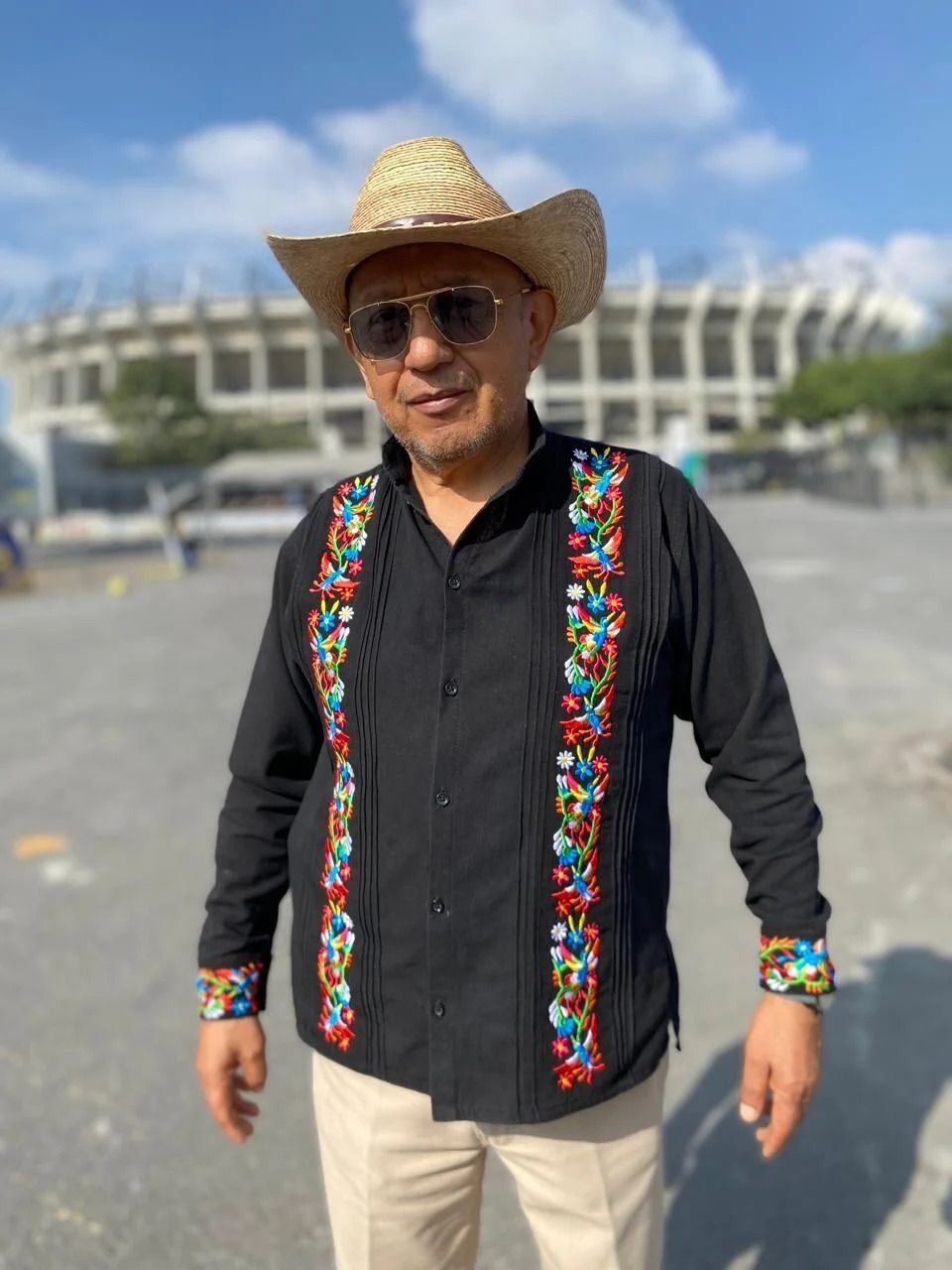
Rubén Ramírez, who leads the Indigenous community of Santa Úrsula Coapa, stands in front of the stadium. He says his people's water needs have been ignored. (Tania Miranda Perez/CBC)
The fight to secure a safe and consistent supply of water for the community is just the latest phase in a long struggle for his community, he says.
Advertisement
Advertisement
Advertisement
Advertisement
"We've had two World Cups, and it has never benefited the people," Ramirez said. "Now, the struggle is over water."
Vying for global attention
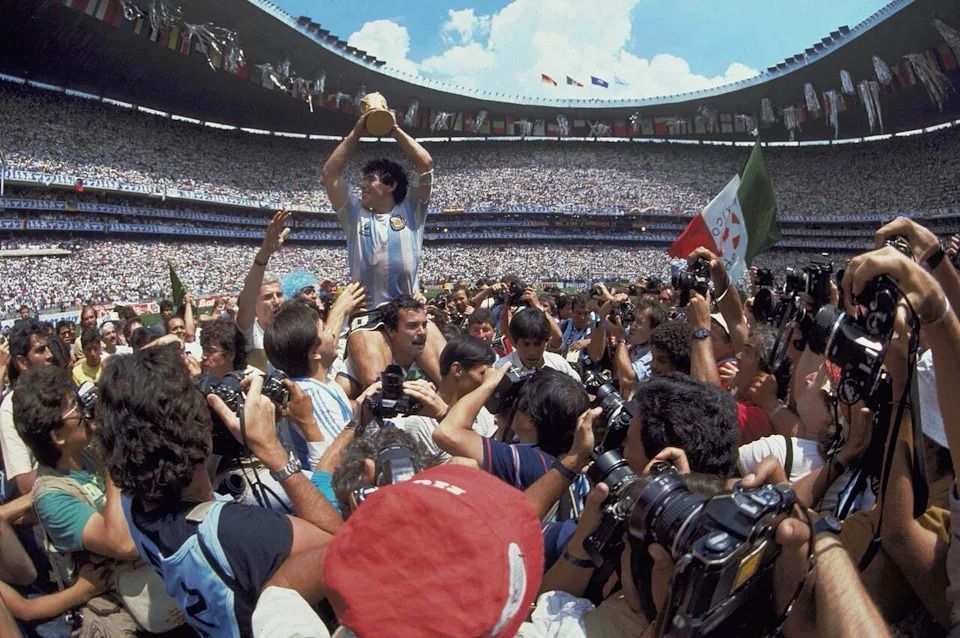
Azteca Stadium, which will be named Mexico City Stadium during next year's tournament, was where Argentine star Diego Maradona scored his famous "hand of God" goal in the 1986 World Cup and where Brazilian star Pele won his last World Cup victory in 1970.
But the beautification projects and renovations that have preceded those high-profile international events have done little to change the stark infrastructure problems facing a community that has long struggled with water rationing and scarcity.
Advertisement
Advertisement
Advertisement
Advertisement
Now, Santa Úrsula Coapa’s residents are trying to bring more local and international attention to those issues by holding weekly events and rallies by an underpass next to the stadium.
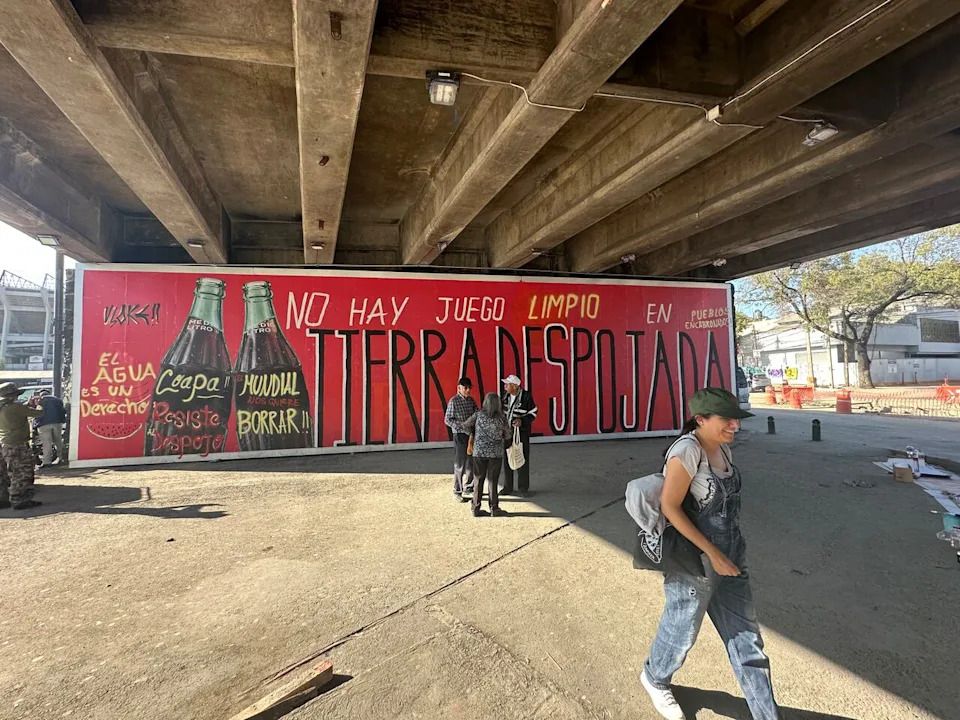
A Christmas-themed Coca-Cola mural was twice painted over with such slogans as, 'There are no clean games on stolen lands.' (Jorge Barrera/CBC)
They're demanding the Mexican federal government expropriate the well from Televisa and use it to provide a secure water supply for the community. They are also calling on Mexico City to finally improve the area's water infrastructure to provide the community with consistent running water.
As part of their protests, a Christmas-themed Coca-Cola mural was twice painted over with slogans such as, "There’s no clean games on stolen lands" and "Televisa steals our water."
Another rally is planned for Sunday.
Advertisement
Advertisement
Advertisement
Advertisement
Ramirez says if the government continues to ignore residents' demands, the protests targeting the World Cup will escalate.
"We have a plan, and we will pay them back with the same coin," said Ramírez.
"So the world can know about the atrocities they commit and how they trample on the rights of the poorest and most vulnerable people."
Water twice a week
Santa Ursula Coapa's remaining territory, called Pueblo de Santa Úrsula Coapa, covers about 65 hectares with a population of 10,800 clustered around the stadium.
(Jason Burles/CBC)
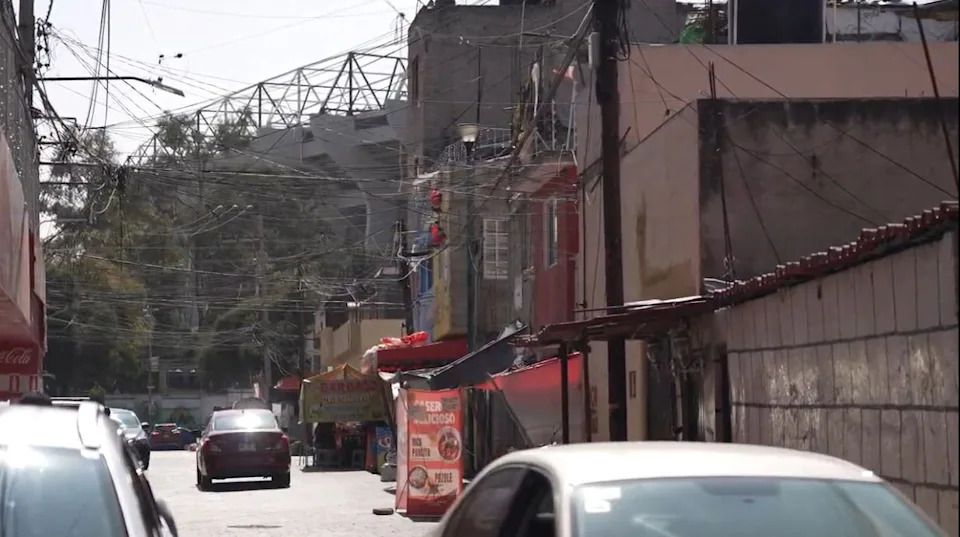
The hulking concrete facade of the stadium looms just down the road from María Estela Alejandro’s home. She runs a small restaurant underneath her residence, which sits along an alleyway where about 50 other families live.
Advertisement
Advertisement
Advertisement
Advertisement
The periodic water shutdowns force her to close shop. When the water does run, it flows at a trickle from her restaurant’s faucet, something she says has gotten worse since World Cup-related construction began in the area.
Washing dishes requires filling multiple bowls with water, so as not to waste a drop.
"It’s ridiculous that a company can own a water well," she said.
"Water belongs to the people."
(Tania Miranda Perez/CBC)
In neighbouring Pedregal Santa Úrsula, Norma Piñón Pérez says she’s been dealing with water shortages for 12 years. The word "pedregal" refers to the volcanic rock that forms the foundation of the area.
Advertisement
Advertisement
Advertisement
Advertisement
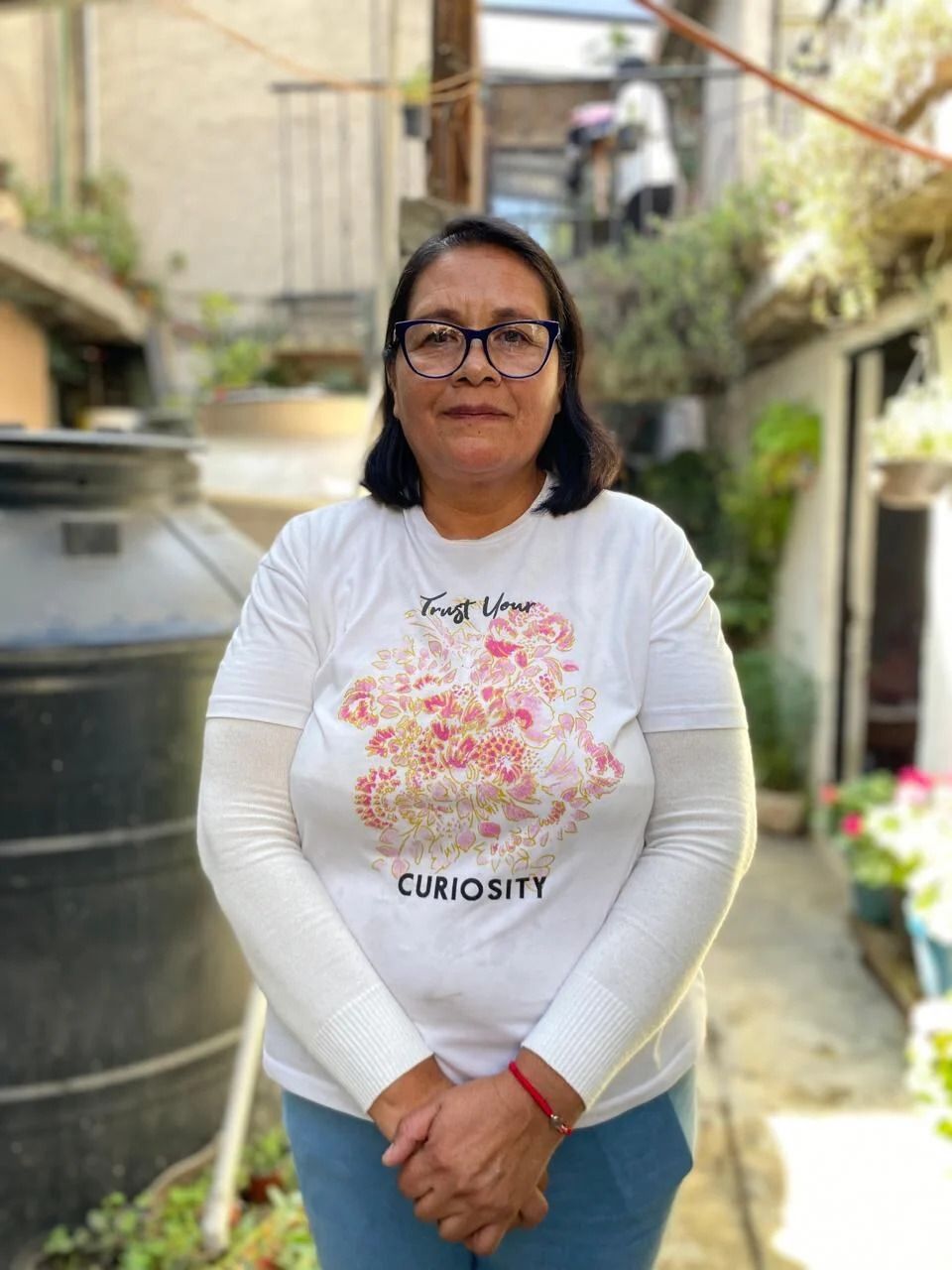
The first time a shortage hit, Piñón Pérez went without tap water for three months. Now, water only flows through the pipes on Mondays and Tuesdays, she said. Her household of nine people depends on an elaborate system they’ve constructed out of water barrels connected to a cistern that fills up over those two days.
“We’ve learned to take care of our water,” she said.
Appealing to mayor, president
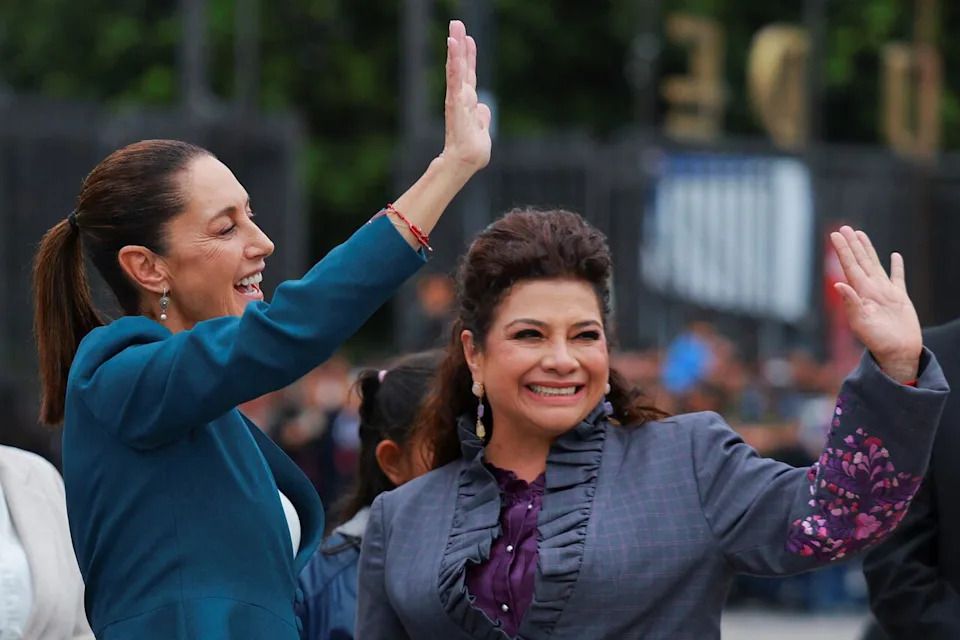
The controversy over the well has reached the desk of Mexico City’s Mayor Clara Brugada. During a World Cup-themed news conference last week, Brugada, on stage with President Claudia Sheinbaum, said that the "stadium’s well" was now "in the hands" of the city.
Advertisement
Advertisement
Advertisement
Advertisement
The next day, residents from Pueblo de Santa Úrsula Coapa and adjacent neighbourhoods attended a meeting with Mexico City officials at which the city representatives said they had no information about the transfer of the well and did not present any plans to improve the community’s drinking water system, said Ramírez.
Mexican President Claudia Sheinbaum, left, and Mexico City Mayor Clara Brugada wave to crowds during an event in the capital on July 9. (Raquel Cunha/Reuters)
Instead, the officials presented plans to build a rain-fed garden by the underpass that’s been the target of recent protests, according to cellphone video of the meeting shared with CBC News.
"We're convinced they are not going to resolve anything," said Guadalupe Castillo Martínez, from Pueblo de Santa Úrsula Coapa.
The community has also appealed to Sheinbaum herself. In a letter delivered this week on behalf of the community and an association of local neighbourhoods, Ramirez appealed to the president to intervene, saying his community remains at the mercy of Televisa as long as the corporation controls the water source.
Advertisement
Advertisement
Advertisement
Advertisement
The agreement between it, the federal government and the city allows the corporation to pull out of the deal at any time, he wrote.
"This could affect the water supply and security of the Pueblo de Santa Úrsula Coapa and nearby neighbourhoods," the letter said.
In the letter, Ramirez argued that the concession was granted to Televisa without consulting residents, which, he said, was a violation of the Indigenous rights enshrined in Mexican law and thus was illegitimate and should be cancelled.
"We are in the anteroom of a social revolt,"' Ramirez said of the community's fight in an interview with CBC. "It’s not because we want it, but because the system is forcing us.
Advertisement
Advertisement
Advertisement
Advertisement
"Money doesn’t guarantee your culture, your well-being, your future. We are doing this for future generations, for our sons, our daughters, our grandchildren."
Diego Maradona holds up his team's trophy after Argentina's 3-2 victory over West Germany at the World Cup final at Azteca Stadium in Mexico City on June 29, 1986. (Carlo Fumagalli/The Associated Press)
Dependent on wells
Well over half of Mexico City’s drinking water system depends on aquifers. The neighbourhoods around Azteca Stadium rely almost exclusively on water drawn from wells drilled into the aquifers, says Adolfo Lara Vásquez, a researcher and retired biologist who has studied the water issue for years.
He says most of the piping systems in the area — due to natural flows and planning decisions by the city — move water away from the neighbourhoods around the stadium to adjacent areas, feeding condo towers and commercial developments that are not subject to rationing as the poorer neighbourhoods are.
Advertisement
Advertisement
Advertisement
Advertisement
Lara Vásquez provided CBC News with a city document that shows most of the neighbourhoods around Azteca Stadium face water scarcity. Yet the city allowed Televisa in 2019 to drill its well as part of a planned mega-development connected to the stadium in an area with construction restrictions due to the water scarcity.
"We find this well exactly inside this red zone," he said.
The development was unveiled in 2021 while Sheinbaum was mayor of Mexico City. It initially received zoning approval from a city official who ended up serving a year in jail for fraud.
The now-cancelled project, once touted as part of the stadium's World Cup renovations, met fierce local resistance driven by fears it would completely drain the area’s water supply and turbo-charge gentrification, driving the local population out.
Advertisement
Advertisement
Advertisement
Advertisement
Lara Vásquez said he and others remain concerned Televisa, or one of its corporate creations, could revive the project with World Cup revenues. The community’s push to have the well expropriated from the company is partly because it wants to prevent that, he said.
"They have everything in place," he said. "They can restart it at any time."
When Televisa first obtained the rights to the well in 2019, it agreed to only use 20 per cent of the output and direct the remaining 80 per cent into the city's drinking water system.
An additional agreement between Televisa, Mexico City and the Mexican federal government, signed this past May, and obtained by CBC News, committed the corporation to supply all the water from the well into city's drinking water system until 2027— when Televisa's concession is set to expire.
Advertisement
Advertisement
Advertisement
Advertisement
Televisa did not directly respond to questions from CBC News. Instead, Ollamani Group, the company created by Televisa in 2024 to take over ownership of the stadium, along with its casino operations and publishing arm, told CBC News that the well has been pumping water into the city’s system since 2023.
Ollamani Group said in the emailed statement there were no plans to restart the project.
An artistic rendering of a planned hotel complex that was to be built next to Azteca Stadium. (Handout)
Corrections
-
An earlier version of this story said that Argentine soccer star Diego Maradona scored his famous "hand of God" goal in the 1970 World Cup. In fact, it was the 1986 World Cup.
Dec 7, 2025 8:10 AM EST
تم ادراج الخبر والعهده على المصدر، الرجاء الكتابة الينا لاي توضبح - برجاء اخبارنا بريديا عن خروقات لحقوق النشر للغير


