


اخبار العرب-كندا 24: الأحد 7 ديسمبر 2025 04:20 صباحاً
Yao Zhang says she doesn’t have any friends, yet every week, thousands of her 175,000 YouTube subscribers tune in to her channel to listen to her live takes on Chinese current affairs.
“China isn’t a democratic country. Everyone suffers in that regime,” Zhang told Radio-Canada during an interview held somewhere between Montreal and Quebec City.
Concerned for her safety, the 39-year-old guards any information that could give away her location.
Advertisement
Advertisement
Advertisement
Advertisement
And for good reason: the Quebec YouTuber, who refuses to be silenced, has been the target of an intimidation campaign by the Chinese government for over a year.
“I have to be very, very careful,” she said. “I stopped all communications with the Chinese community because I don’t know who I can trust.”
Explicit fake images part of ‘spamouflage' campaign
Trained in accounting at McGill University, Zhang did a 180 during the pandemic and began offering news commentary on YouTube, which she continues to do today. The Communist Party of China and president Xi Jinping are often the subjects of her criticisms.
Advertisement
Advertisement
Advertisement
Advertisement
“I’m with Taiwan, I’m with the Uyghurs, I’m with Hong Kong. I’m against the Chinese government,” said the pro-democracy activist.
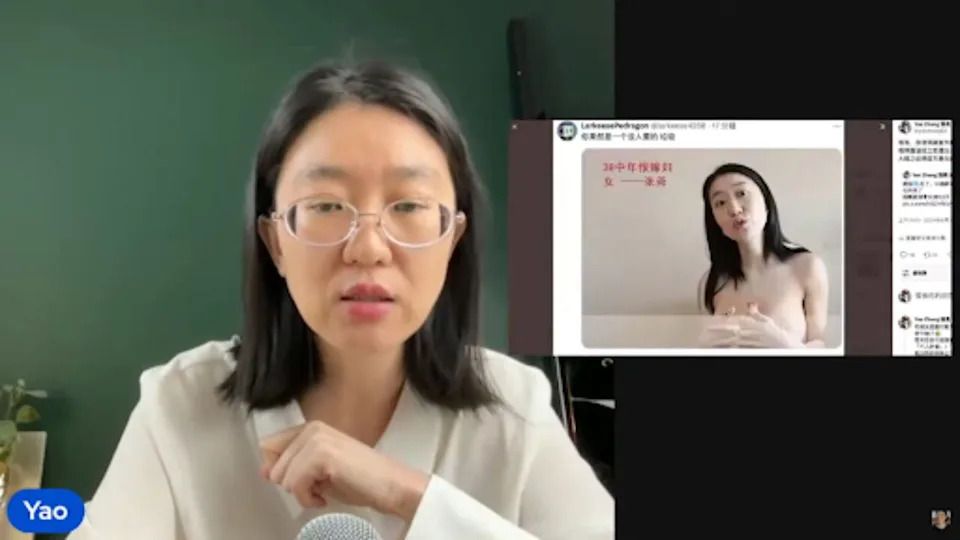
It was in September 2024 that Zhang first noticed sexually explicit AI-generated images of herself circulating online.
“It wasn’t just one photo. There were many, many of them,” she remembered with disgust.
Shared by anonymous accounts, the images were published on social media under posts of official accounts belonging to the Canadian government and then prime minister Justin Trudeau.
In a YouTube video in September 2024, Yao Zhang denounced the deepfakes of her that were circulating online, such as the one pictured in this image. (Yao Zhang/YouTube)
For the YouTuber, there was no doubt the People’s Republic of China (PRC) was behind what she was seeing. And she was right.
Advertisement
Advertisement
Advertisement
Advertisement
In March, Global Affairs Canada (GAC) released a statement blaming the PRC for a new "spamouflage" campaign using sexually explicit AI-generated images to target individuals in Canada. Zhang says the government told her she is the first documented case of the campaign.
“This new campaign employs various tactics to intimidate, belittle and harass individuals based in Canada who are critical of the PRC,” reads the statement.
Notably, Zhang and members of her family have been doxed. Her date of birth, phone and passport numbers all appear on a doxing website that labels her as a “traitor.” The site, which is still accessible to this day, also uses degrading language to spread defamatory sexually explicit statements about her.
When you criticize the Chinese government, you have to live like an island. You can’t trust others.- Yao Zhang
Zhang takes the risk of espionnage seriously as well. She turns down all corporate sponsorships, saying the Chinese government uses money to get closer to its targets.
Advertisement
Advertisement
Advertisement
Advertisement
She moved to Canada as an adult with her mother, who she calls “the only person I can trust.”
“She’s more courageous than me,” her mother, XiaoYun Wang, said with tears in her eyes.
Despite the fear, she says she supports her daughter wholeheartedly.
Threats in China
Though the YouTuber benefits from a certain degree of protection in Canada, she can’t say the same for her family in China.
In 2024, after a trip to Taiwan to support the island’s independence, Zhang said China's national police put pressure on her aunt and grandmother living there in an attempt to silence her.
The strategy is a well known one, detailed in a report published earlier this year by the Public Inquiry into Foreign Interference in Federal Electoral Processes and Democratic Institutions.
Advertisement
Advertisement
Advertisement
Advertisement
“[The PRC] employs a wide range of tradecraft to carry out its activities, one of which is to use a person’s family and friends living in the PRC as leverage against them,” it reads.
Zhang says she’s received death threats against her and her family and is worried about retribution if she were to ever return to China.
“I’ll go to prison,” she said. “I’ll be like all those who have wanted to change China.”
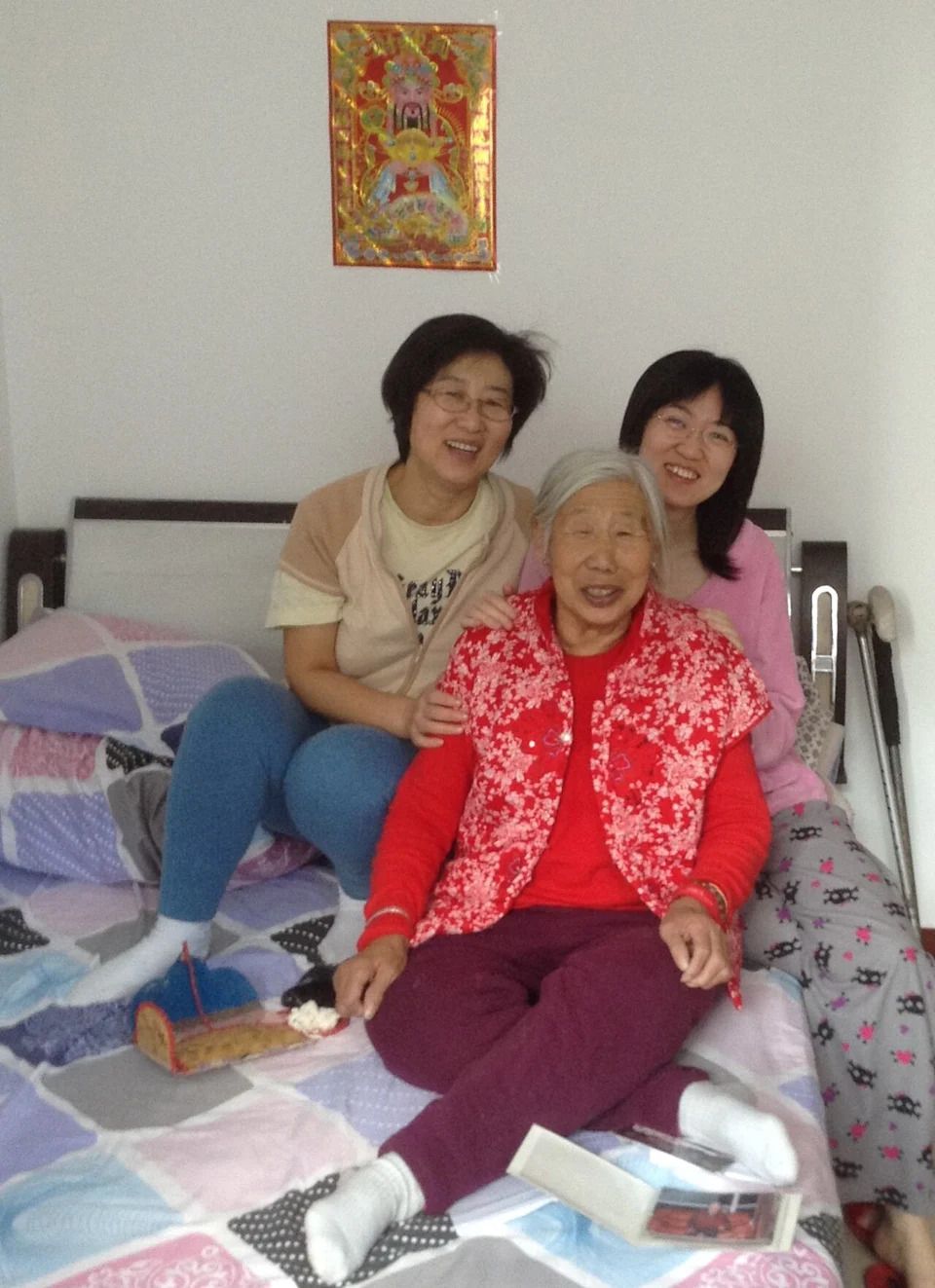
Yao Zhang, left, her mother and her grandmother, centre. (Submitted by Yao Zhang)
Hunting dissidents
Transnational repression is a “genuine scourge” in the country, concluded Marie-Josée Hogue, who presided over the public inquiry into foreign interference. The threat it poses “is real and growing,” adds the report.
Advertisement
Advertisement
Advertisement
Advertisement
The former Canadian ambassador to China, Guy Saint-Jacques, who occupied the function from 2012 to 2016, says budgets allocated to cracking down on dissent “increased substantially” after Xi came to power in 2012.
Notably, an Enquête investigation revealed that a Chinese dissident found dead in British Columbia in 2022, Hua Yong, was the target of an espionnage operation led by the Chinese secret police.
Despite the loneliness, Zhang says she is at peace and hopes that more Chinese people in Canada and elsewhere in the world will speak out.
“I am using my life for something very important,” she says.
The Chinese embassy did not respond to Radio-Canada’s requests for comments.
تم ادراج الخبر والعهده على المصدر، الرجاء الكتابة الينا لاي توضبح - برجاء اخبارنا بريديا عن خروقات لحقوق النشر للغير


