

اخبار العرب-كندا 24: الأربعاء 3 ديسمبر 2025 06:44 مساءً
A crucial hearing in Washington into the future of Canada’s three-way trade deal with the U.S. and Mexico kicked off Wednesday with U.S. agriculture, business and policy groups urging the Trump administration not to scrap the agreement.
The hearing, held by the Office of the U.S. Trade Representative (USTR), is the centrepiece of the government’s public consultation about whether to renew the Canada-U.S.-Mexico Agreement (CUSMA) in 2026, renegotiate it, or withdraw.
Speaker after speaker called for an extension of the agreement, emphasizing how its free trade terms have allowed their sector to boost revenues through access to both the Canadian and Mexican markets.
Advertisement
Advertisement
Advertisement
Advertisement
Several warned that U.S. President Donald Trump’s tariff-fuelled trade war puts that lucrative access at risk.
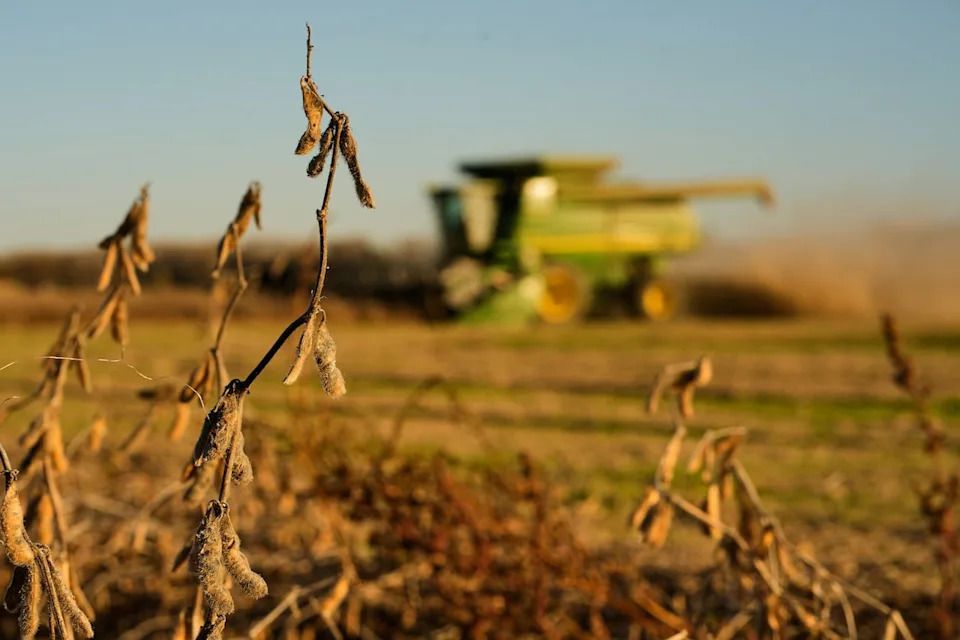
Dave Walton, secretary of the American Soybean Association, spoke out against Trump’s move to hit Canadian and Mexican exports with tariffs, including those targeting specific industrial products such as steel, aluminum and automotive parts.
The tariffs “increase the likelihood that U.S. soybean farmers will end up in the crosshairs of potential retaliation,” Walton said.
(Charlie Riedel/The Associated Press)
“Our industry would not survive a long tariff battle with our two closest customers,” he said, adding that a failure to renew the trade deal – known south of the border as USMCA – would be catastrophic for his industry.
Advertisement
Advertisement
Advertisement
Advertisement
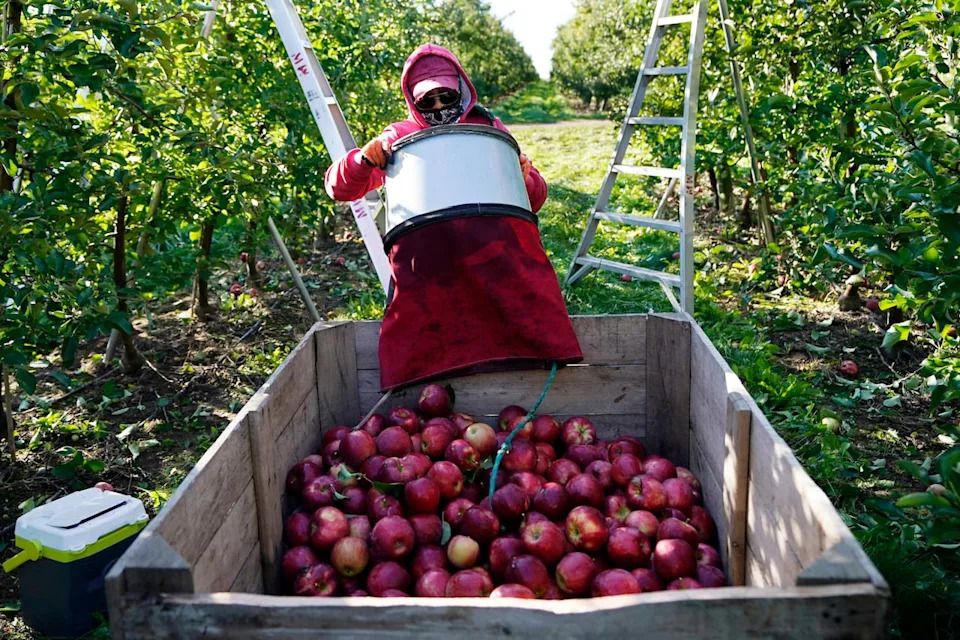
Riley Bushue, vice-president of the Northwest Horticultural Council, representing the biggest U.S. apple, pear and cherry growers, a $13 billion US industry, said retaliatory tariffs imposed by Mexico during Trump’s first-term trade war damaged his industry’s exports.
'Severe economic losses'
“With thousands of American family tree-fruit farms already at risk of going out of business, losing preferential access to Mexico and Canada would be devastating,” Bushue told the hearing.
“There are no other export market opportunities capable of offsetting the severe economic losses to growers in the event that we lose preferential access to Mexico and Canada.”
Advertisement
Advertisement
Advertisement
Advertisement
Testimony at the hearing will, in theory, feed into the Trump administration’s decision whether to extend CUSMA when it’s up for review on July 1, 2026.
Under federal law, the USTR must by Jan. 2 report to Congress its recommendation on renewing the trade agreement or taking other action.
(Carlos Osorio/The Associated Press)
While the witnesses were testifying about the agreement on Wednesday, a reporter asked Trump for his position on renegotiating it.
"We'll either let it expire, or we'll maybe work out another deal with Mexico and Canada," Trump said at the White House.
"Mexico and Canada have taken advantage of the United States like just about every other country," he continued before launching into a defence of his tariffs.
150 witnesses
Nearly 150 people are scheduled to present over the three-day hearing, grouped by industry.
Advertisement
Advertisement
Advertisement
Advertisement
Wednesday’s list was dominated by U.S. agricultural producers, along with the clothing and pharmaceutical sectors, plus a range of trade policy experts.
Among the sectors that urged the Trump administration to renew the trade deal: almond producers, berry producers and corn growers.
Raquel Espinoza, chairwoman of the Arizona-based Fresh Produce Association of the Americas, representing import and distribution businesses, called for the “preservation of tariff-free trade” with Canada and Mexico.
“Protectionism enriches a few at the expense of American consumers and agricultural exports” Espinoza told the hearing.
Advertisement
Advertisement
Advertisement
Advertisement
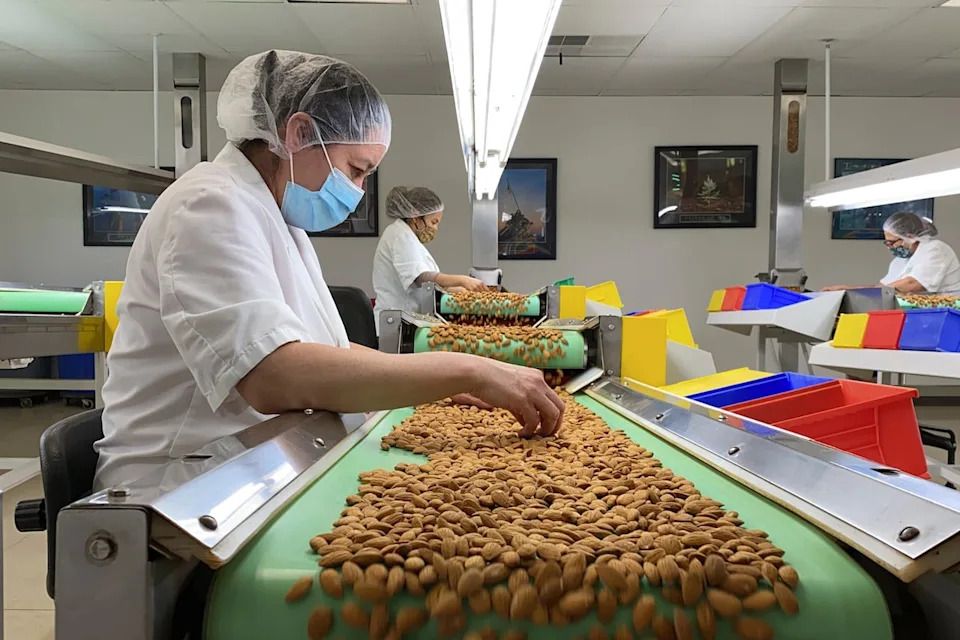
Alicia Rockwell, chief government affairs officer for Blue Diamond, the major California-based almond producer, called Canada and Mexico “absolutely critical markets” for her industry and described CUSMA as “essential for the survival of thousands of family farms.”
(Terry Chea/The Associated Press)
Certain sectors, while supporting the trade deal’s extension, raised technical issues with the way it is being implemented, with the bulk of criticism from Wednesday’s speakers targeted at Mexico.
Avocado growers raised concerns that inspections of imported avocados from Mexico are inadequate to stop the risk of pests and asked for quotas to limit the amount of avocados coming in tariff-free.
Mexico's enforcement
Florida’s fruit and vegetable growers claimed Mexican government subsidies are undercutting their business and urged the Trump administration to push for tariff
Advertisement
Advertisement
Advertisement
Advertisement
Teddy Koukoulis, chair of the North American Blueberry Council, said U.S. blueberry exports to Canada have risen extraordinarily as a result of the trade agreement, but raised concerns about Mexico’s monitoring of labour standards.
“We don’t need to revise the standards, I think we need to hold the Mexican government for making sure that they enforce the standards,” Koukoulis said.
Canada’s agricultural trade practices did not escape without criticism, particularly for its protection of the dairy sector.
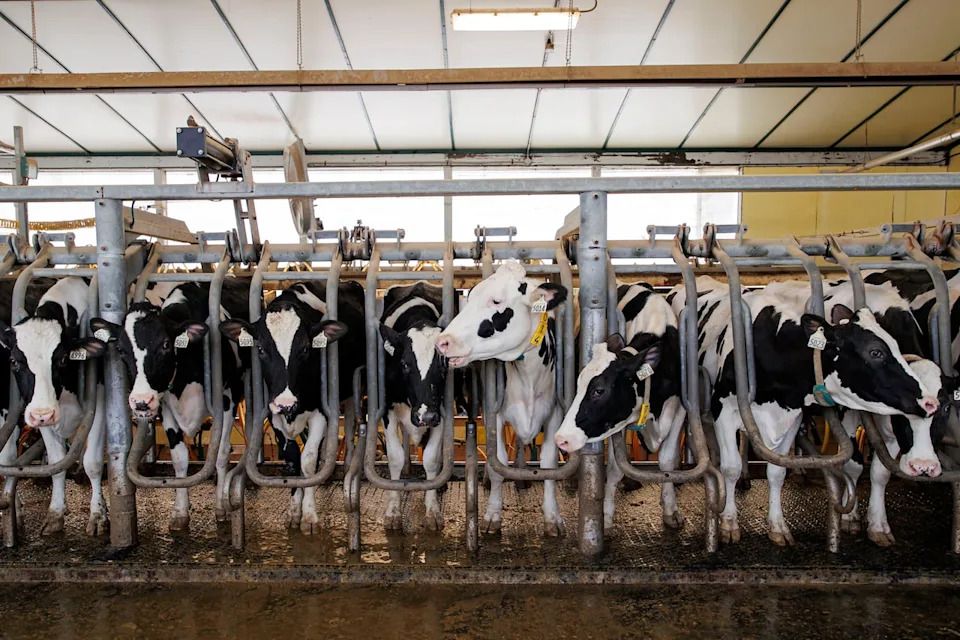
(Evan Mitsui/CBC)
“In contrast to Mexico, Canada has always been a particularly challenging dairy trading partner,” said Shawna Morris, executive vice president of the National Milk Producers Federation and the U.S. Dairy Export Council.
Advertisement
Advertisement
Advertisement
Advertisement
“Regrettably, Canada has a long history of working to identify and exploit loopholes in its dairy trade commitments rather than abiding by them in good faith,” Morris told the hearing,
Becky Rasdall Vargas, senior vice-president of the International Dairy Foods Association, urged the Trump administration to preserve the positive elements of CUSMA while rectifying what she called violations of the agreement.
Canada’s implementation of the agreement “has actually limited U.S. dairy exporter access to the Canadian market instead of improving it as was intended,” Rasdall Vargas told the hearing.
“Canada has done very little to address those concerns meaningfully,” she said.
Advertisement
Advertisement
Advertisement
Advertisement
Two officials representing U.S. beef producers told the hearing they want mandatory country of origin labelling to become part of a renewed agreement.
A representative of the U.S. distilled spirits sector called for the trade deal to include geographic designations that would apply to such products as American bourbon, Canadian rye, and Mexican tequila and mescal.
تم ادراج الخبر والعهده على المصدر، الرجاء الكتابة الينا لاي توضبح - برجاء اخبارنا بريديا عن خروقات لحقوق النشر للغير


